
Products
Industrial Gears Made to Drawing or Sample
TSIRIKOS manufactures custom industrial gears – spur, helical, double-helical, bevel, worm and internal gears, pinions and special gears – to your drawing or from a worn sample, in its workshops in Piraeus, Greece. Gear cutting, heat treatment, tooth grinding and inspection are carried out in-house.
Main applications
-
Gearboxes and speed reducers
Learn more : Gearboxes and speed reducersReplacement gears and gear sets for industrial gear units, and gears for new gearboxes built to your application.
-
Mining, quarrying and cement equipment
Learn more : Mining, quarrying and cement equipmentGears for mills, crushers, conveyors and other heavy processing equipment, where shock loads and dust demand robust tooth design.
-
Cranes, ports and marine machinery
Learn more : Cranes, ports and marine machineryGears for crane drives, port handling equipment, winches and ship machinery, including bevel gears for overhead cranes.
-
Construction and earth-moving equipment
Replacement gears, spiral bevel sets and differential parts for heavy mobile machinery whose original parts are no longer available.
-
Plastics, recycling and process plants
Learn more : Plastics, recycling and process plantsGears for extruder and recycling-machinery drives, agitators, mixers and pumps in process plants.
Gear types we manufacture
-
Spur gears
External spur gears and cluster (double) gears for gearboxes and machinery, cut and, where specified, case-hardened and ground.
-
Helical gears
Helical gears and gear pairs for parallel shafts, a core activity since 1965; typically gas carburized, hardened and tooth-ground.
-
Double-helical (herringbone) gears
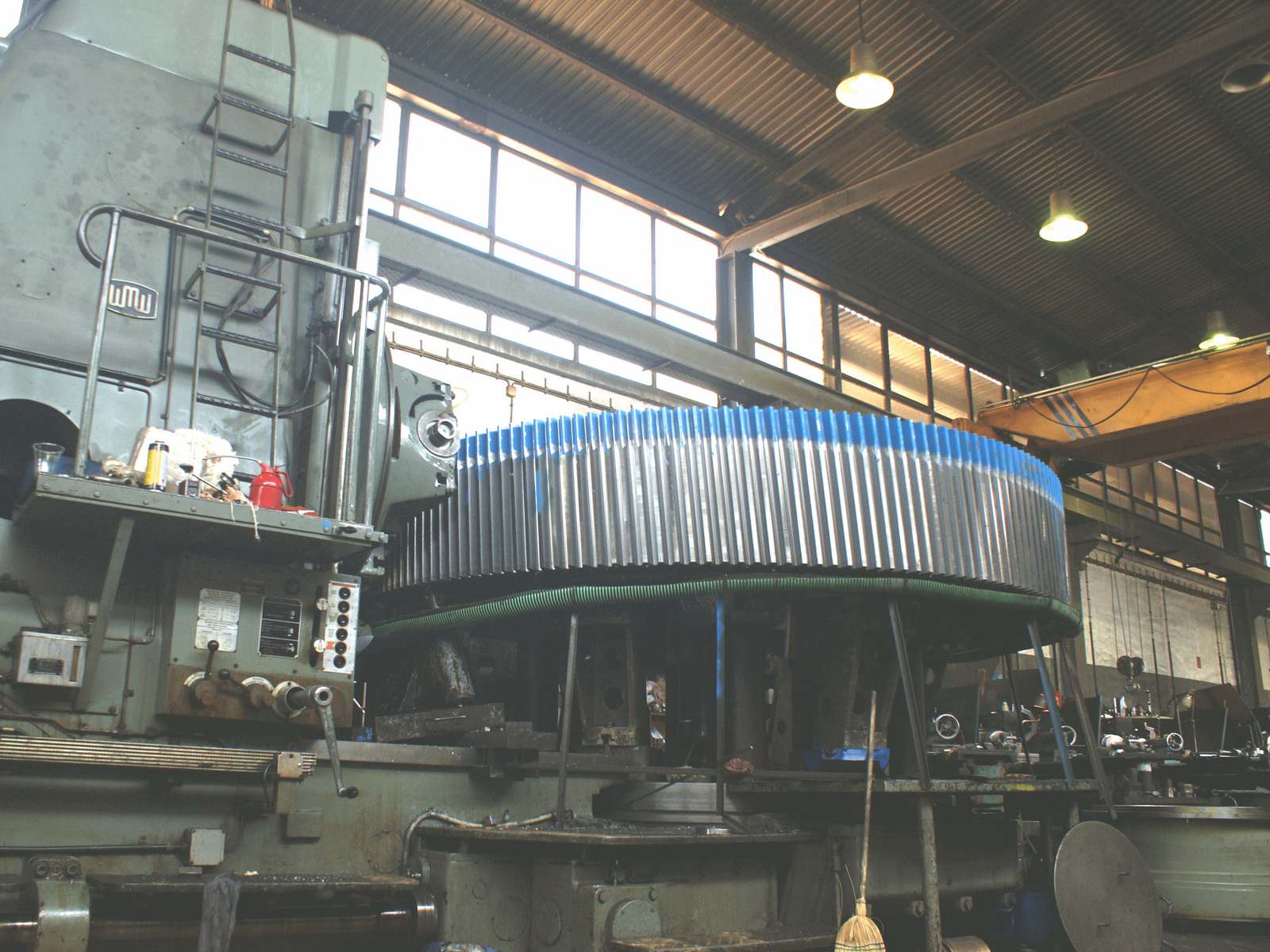
Double-helical gears with central gap and continuous herringbone designs for heavy, high-torque drives without axial thrust.
-
Straight and spiral bevel gears
Straight bevel gears, spiral bevel gears and matched crown wheel and pinion sets, generated in-house.
-
Hypoid and Zerol bevel gear sets
Hypoid and Zerol sets for differentials and right-angle drives, including hypoid replacement sets.
-
Worm gear sets
Worms and worm wheels, single- and multi-start; worm threads can be ground and large-lead, multi-start worm wheels are cut with a tangential head.
-
Internal and ring gears
Internal spur and helical ring gears (annulus gears), including ring gears for planetary stages.
-
Pinions and pinion shafts
Learn more : Pinions and pinion shaftsPinions cut integral with their shaft when the root diameter leaves no room for a bore.
-
Special gears
Learn more : Special gearsRatchet wheels, sprockets, spline hubs and Hirth couplings made to drawing.
-
Racks
Gear racks made to drawing.
-
Gear-cutting capacity: Ø 4 m, module 1–20
Maximum machining diameter 4 m and module 1 to 20 for double-helical gears.
-
Spiral bevel capacity: Ø 1000 mm, module 13
Maximum outside diameter 1000 mm and maximum module 13 for spiral bevel gear generation.
Gear types we manufacture
TSIRIKOS does not sell catalogue gears. Every gear is made to the customer’s drawing, specification or worn sample, with the tolerances the application requires. The main families are described below; the list of gear types on this page shows the current scope.
Spur and helical gears
Spur gears have teeth parallel to the axis. They are simple to manufacture and inspect and produce no axial thrust, which suits moderate speeds and many gearbox stages. Helical gears have teeth cut at a helix angle, so that several teeth share the load at any moment: they run more quietly and carry more load for the same size, at the cost of an axial force that the bearings must take. Helical gears have been a core activity of the company since 1965, typically gas carburized, hardened and then ground on the tooth flanks. We also make cluster (double) gears for gearboxes.
Double-helical (herringbone) gears
Two opposed helices cancel each other’s axial thrust. This makes double-helical gears a common choice for heavy, high-torque drives such as mill and rolling-mill gear units. Designs with a central gap for tool run-out and continuous herringbone designs are both in service; the drawing defines which one your machine needs.
Bevel gears
Bevel gears transmit motion between intersecting shafts, usually at 90°. Straight bevel gears suit low speeds. Spiral bevel gears, with curved teeth, run more smoothly and carry more load; they are used in right-angle gearboxes, differentials and crane drives. We generate spiral bevel gears in-house and supply crown wheel and pinion sets as matched pairs. Hypoid sets (with offset axes) and Zerol designs are assessed case by case.
Worm gear sets
A worm and worm wheel transmit motion between crossed, non-intersecting shafts and give high ratios in a single stage. We manufacture worms and worm wheels, single- and multi-start, and grind worm threads; large-lead, multi-start worm wheels are cut with a tangential head.
Internal gears, pinions and special gears
Internal gears (annulus or ring gears) carry their teeth on the inside of a ring and form the outer member of planetary stages. Small pinions are often cut integral with their shaft when the root diameter leaves no room for a bore – see shafts and pinion shafts. Special gears made to drawing include ratchet wheels, sprockets, spline hubs and Hirth couplings.
From drawing to finished gear
Because machining, heat treatment and grinding are carried out under one roof, the whole route is controlled by the same team:
- Engineering review – checking the drawing or sample data, the gear geometry and the load capacity against the application.
- Material – steel chosen for the duty; special-composition steels are imported when the part requires them.
- Blank machining – turning and milling, leaving allowance for heat treatment and grinding.
- Gear cutting – hobbing of spur, helical and double-helical teeth, generation of spiral bevel gears, cutting of worms and worm wheels.
- Heat treatment – gas carburizing, nitriding, nitrocarburizing or induction hardening in our own heat-treatment department.
- Finishing – tooth-flank grinding after case hardening, grinding of bores and journals.
- Inspection – dimensions, tooth form, hardness, surface roughness and crack examination before dispatch.
Choosing the gear specification
When a gear is replaced rather than redesigned, the safest approach is to reproduce the original geometry exactly: module, number of teeth, pressure angle, helix angle and hand, profile shift and face width must match the mating gear. A few points deserve an explicit decision:
- Replace in pairs. A new gear meshing with a worn mate wears quickly and may run noisily. For critical drives, replace pinion and wheel together.
- Heat treatment and case depth. Case-hardened and ground teeth carry much more load than through-hardened teeth of the same size, but the case depth must suit the module and the loads. Our guide to gear materials and heat treatment explains the options.
- Accuracy grade. State the required grade (ISO 1328, DIN 3962 or AGMA). Higher grades usually call for ground teeth.
- Repeated failures. If a gear has failed more than once, it is worth reviewing the material, the heat treatment or the geometry with us before the replacement is made.
What to send for a quotation
The data we need is listed in the quotation section of this page. If there is no drawing, send the worn gear or clear photos with the main dimensions, the tooth count and the mating gear data: we can work from a sample through reverse engineering. Our guide How to request a quote for a custom gear explains every parameter. For complete gear units, see gearboxes and speed reducers.
When your data is ready, request a quote. We review the technical data and come back to you with questions where something is unclear.
Materials
-
Case-hardening steels
Steels such as 18CrNiMo7-6 (1.6587) for carburized and ground gears with a hard, wear-resistant case and a tough core.
-
Through-hardening and nitriding steels
Steels such as 42CrMo4 (1.7225), 34CrNiMo6 (1.6582) and 31CrMoV9 (1.8519) for quenched and tempered, nitrided or nitrocarburized gears.
-
Special-composition steels
Steel grades are imported and selected according to the application and the requirements of each part.
-
Bronze for worm wheels
Bronze rims or wheels for worm gear sets, as specified on the drawing.
The material on your drawing always takes precedence. Where no grade is specified, we propose one for the duty and agree it with you before manufacture.
Manufacturing approach
-
Engineering review
Check of the drawing or sample data, gear geometry and load capacity against the application, using ISO 6336, DIN 3990 or AGMA methods as specified.
-
Material and blank
Steel selected for the duty, then turning and milling of the blank with allowances for heat treatment and grinding.
-
Gear cutting
Hobbing of spur, helical and double-helical teeth, generation of spiral bevel gears, cutting of worms and worm wheels.
-
Gear shaping of internal teeth
Shaping of internal ring gears and shouldered teeth.
-
Heat treatment
In-house gas carburizing with oil quenching and tempering, gas nitriding, nitrocarburizing or induction hardening, according to the design.
-
Gear grinding and finishing
Tooth-flank grinding after case hardening for correct profile and low roughness; grinding of bores, faces and journals.
-
Final inspection
Dimensional, tooth-form, hardness and roughness checks and crack examination before dispatch.
Quality considerations
-
Tooth form inspection
Gear tooth form is inspected on finished gears.
-
Hardness after heat treatment
Surface hardness is tested after heat treatment; gas carburizing conditions are recorded continuously during the cycle.
-
Surface roughness
Roughness of ground flanks and bearing surfaces is measured after final machining and grinding.
-
Crack examination
Surfaces are examined for micro-cracks after heat treatment and grinding.
-
Contact pattern
Mating gears can be checked for contact pattern, for example when a gear pair or a bevel set is supplied as a matched set.
-
Inspection documents
Inspection documents to EN 10204 (types 2.1, 2.2, 3.1); type 3.2 requires an independent inspector appointed by the customer or a third party.
Representative images
-
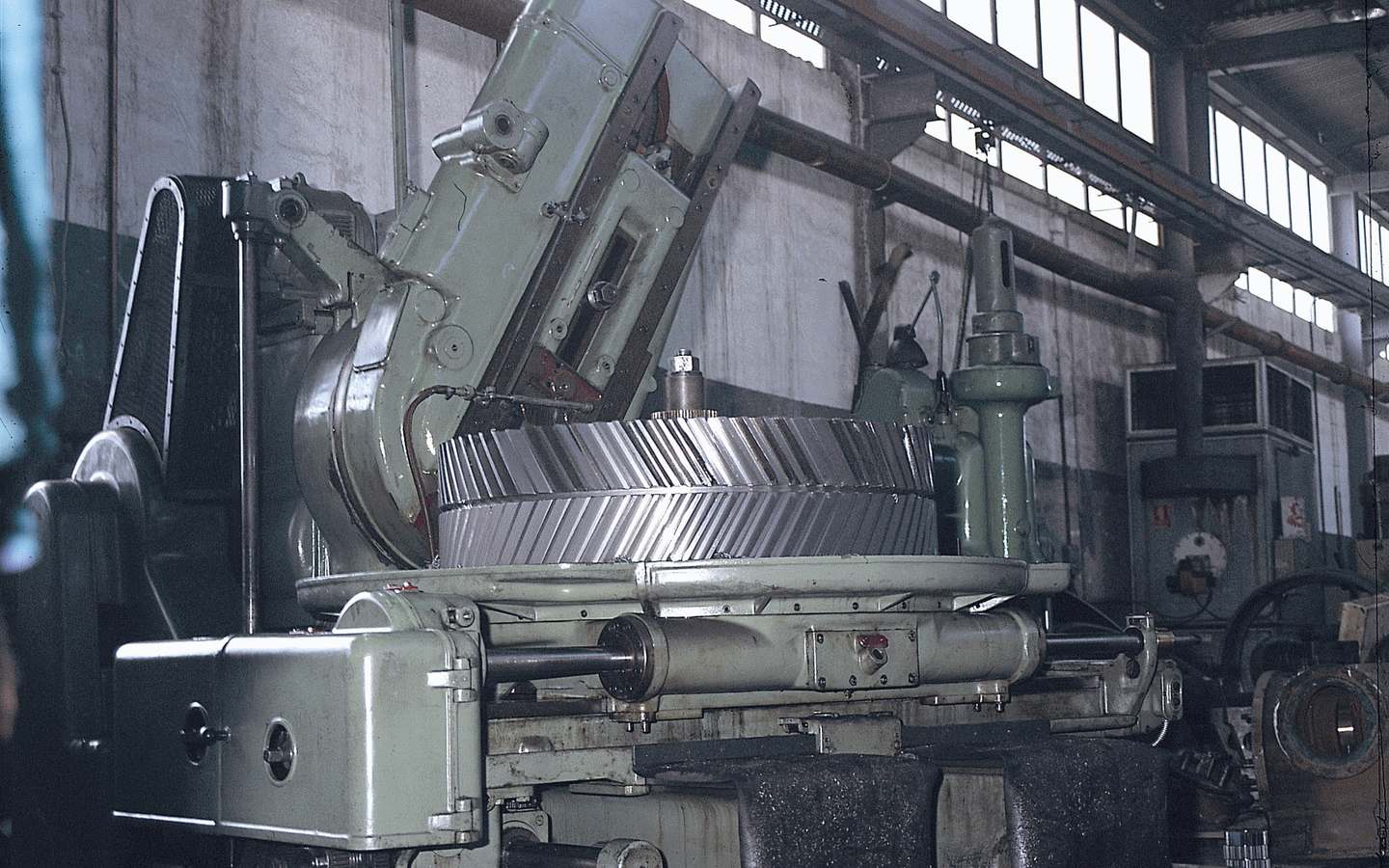
Large double-helical gear on a heavy vertical gear hobbing machine -
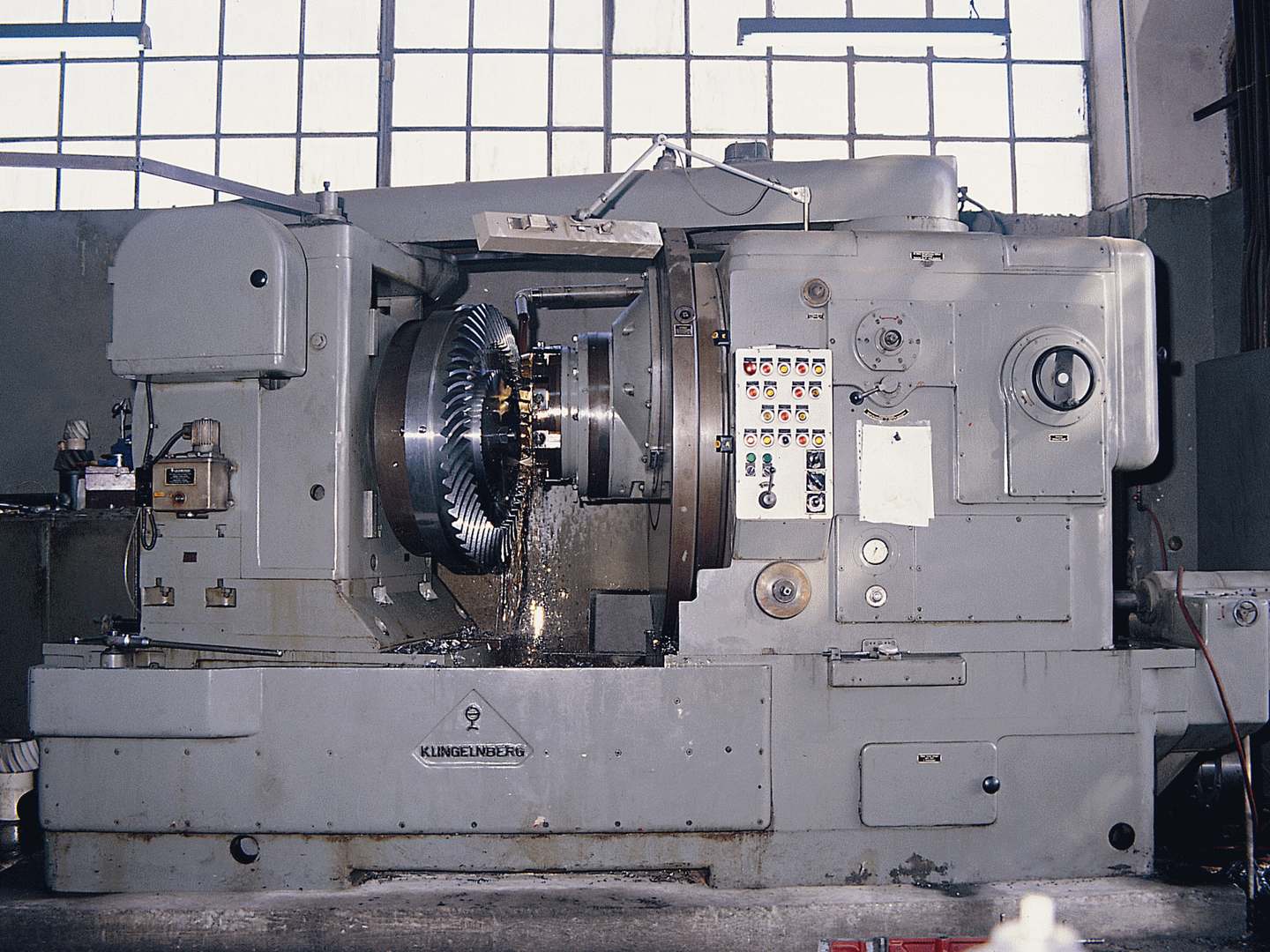
Spiral bevel gear being cut on a Klingelnberg bevel gear generator -
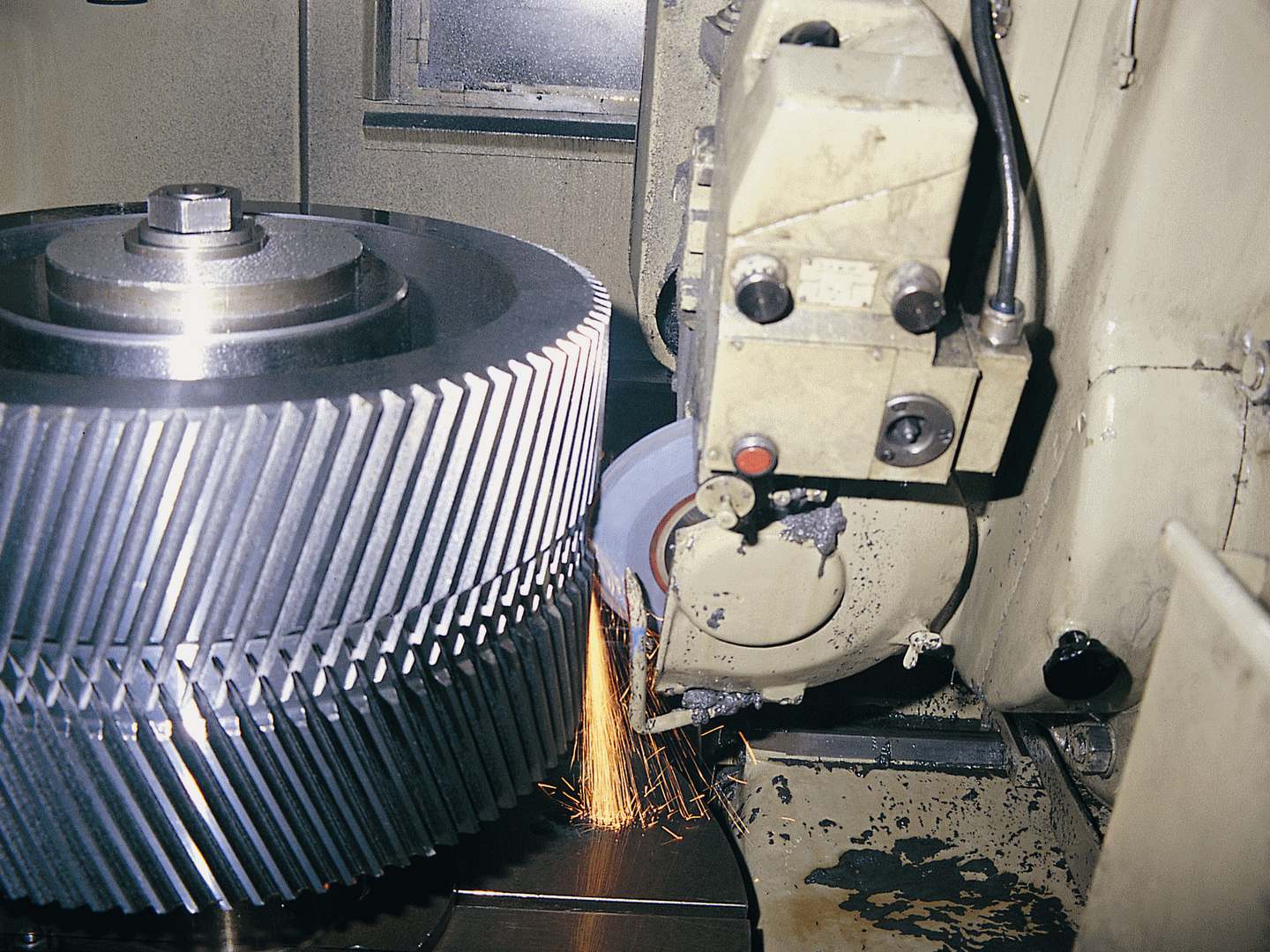
Gear tooth flanks being ground on a gear grinding machine, sparks at the wheel -
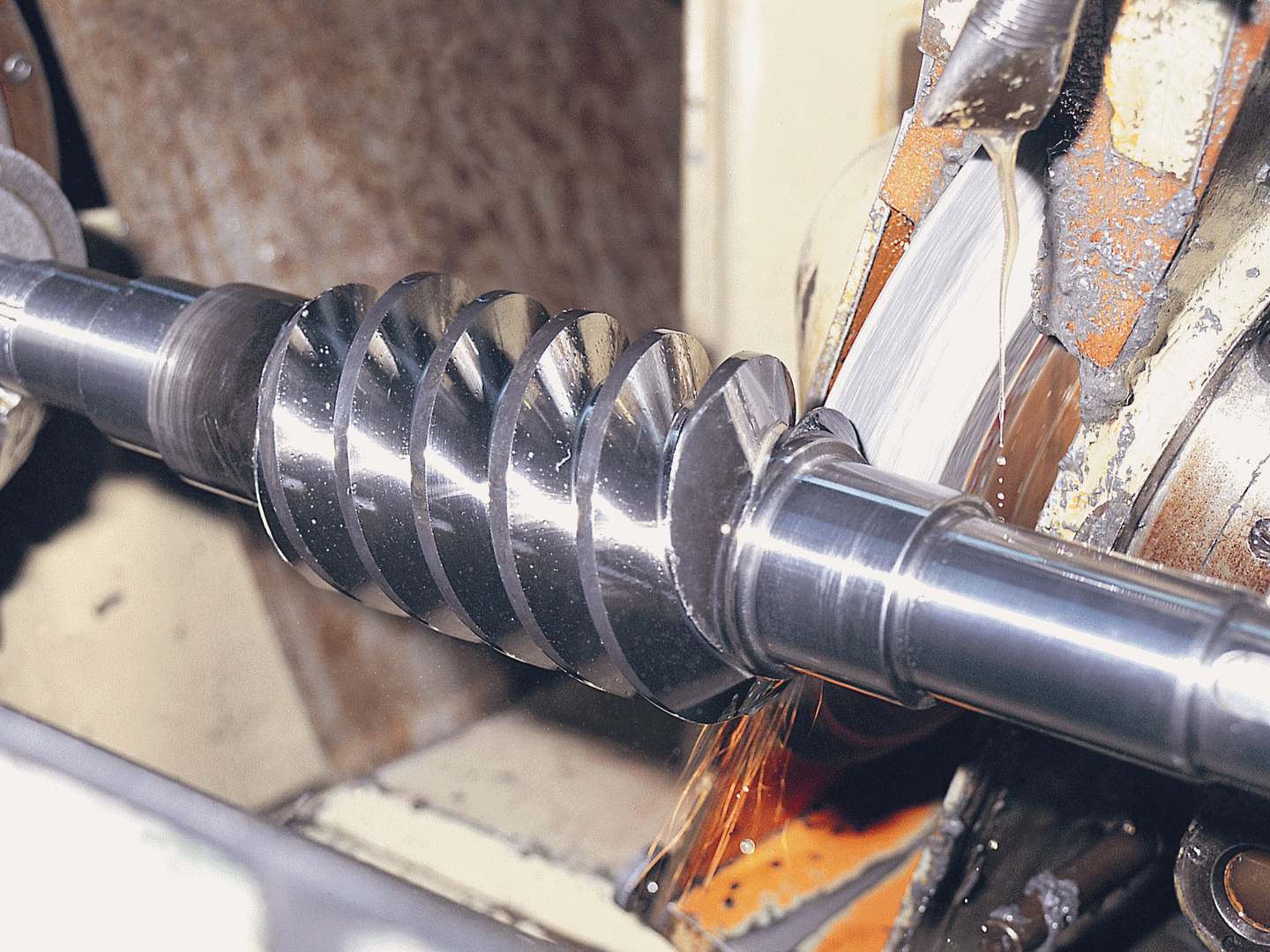
Worm shaft being ground on a thread grinding machine with coolant and sparks
Technical FAQ
Can you make a gear without a drawing?
Yes. We manufacture from a sample or a worn gear: we measure the part, determine the gear parameters with you, check the mating gear data and agree the material and heat treatment before manufacture. Photos and the main dimensions are enough to start the discussion.
Which standards do you use for gear design and accuracy?
Gears are designed and checked with ISO 6336, DIN 3990 and AGMA methods, and accuracy is specified to ISO 1328, DIN 3962 or AGMA as stated on your drawing. If your drawing refers to another standard or an older edition, we work to it.
Do you case-harden and grind gears?
Yes. Gas carburizing, hardening and tempering are done in our own heat-treatment department, and the tooth flanks are then ground. Nitriding, nitrocarburizing and induction hardening are also available when the design calls for them.
What is the largest gear you can make?
Maximum diameters and modules depend on the gear type and the machine used: up to Ø 4 m and module 1–20 for double-helical gears, and up to Ø 1000 mm outside diameter and module 13 for spiral bevel gears. Send the main dimensions with your enquiry and we will confirm feasibility for your specific gear.
Should I replace both gears of a worn pair?
In most cases, yes. A new gear running against a worn mate wears quickly and may be noisy, because the tooth profiles no longer match. For bevel and spiral bevel gears, the wheel and pinion are cut and checked together as a matched set and should always be replaced together.
Can you deliver gears to plants outside Greece?
Yes. All gears are manufactured and inspected in Greece; packing, transport and delivery terms are agreed for each order. Exports have mainly gone to North Africa and the Mediterranean.
Related pages
Request for quotation — Industrial Gears Made to Drawing or Sample
Spur, helical, double-helical, bevel, worm and internal gears, pinion shafts and special gears, made to drawing or sample with in-house gear cutting, heat treatment and grinding.
Please attach your technical drawings and specifications to your email.