
Products
Custom Machined Components to Drawing
TSIRIKOS manufactures special mechanical components to customer drawings: rotors, star wheels, rings, flanges, drums, housings, dies and ship-machinery parts in steels, stainless steels, nickel alloys, non-ferrous metals and PTFE, with machining, heat treatment and grinding under one roof in Piraeus, Greece.
Main applications
-
Pumps and compressors
Learn more : Pumps and compressorsRotors, pump bodies, housings and internal parts for liquid pumps and compressors.
-
Metal forming and extrusion presses
Learn more : Metal forming and extrusion pressesPress dies, liners and containers, dummy blocks, knives and profile-forming rolls.
-
Ship machinery and propulsion
Learn more : Ship machinery and propulsionParts for propeller systems, steering gear, pumps and deck machinery.
-
Plastics processing and recycling
Learn more : Plastics processing and recyclingDies for polymer regeneration and knives and rollers for crushing machinery.
-
Process and bulk-handling equipment
Learn more : Process and bulk-handling equipmentDrums, star wheels, flanges and agitator parts for process plants.
Typical components
-
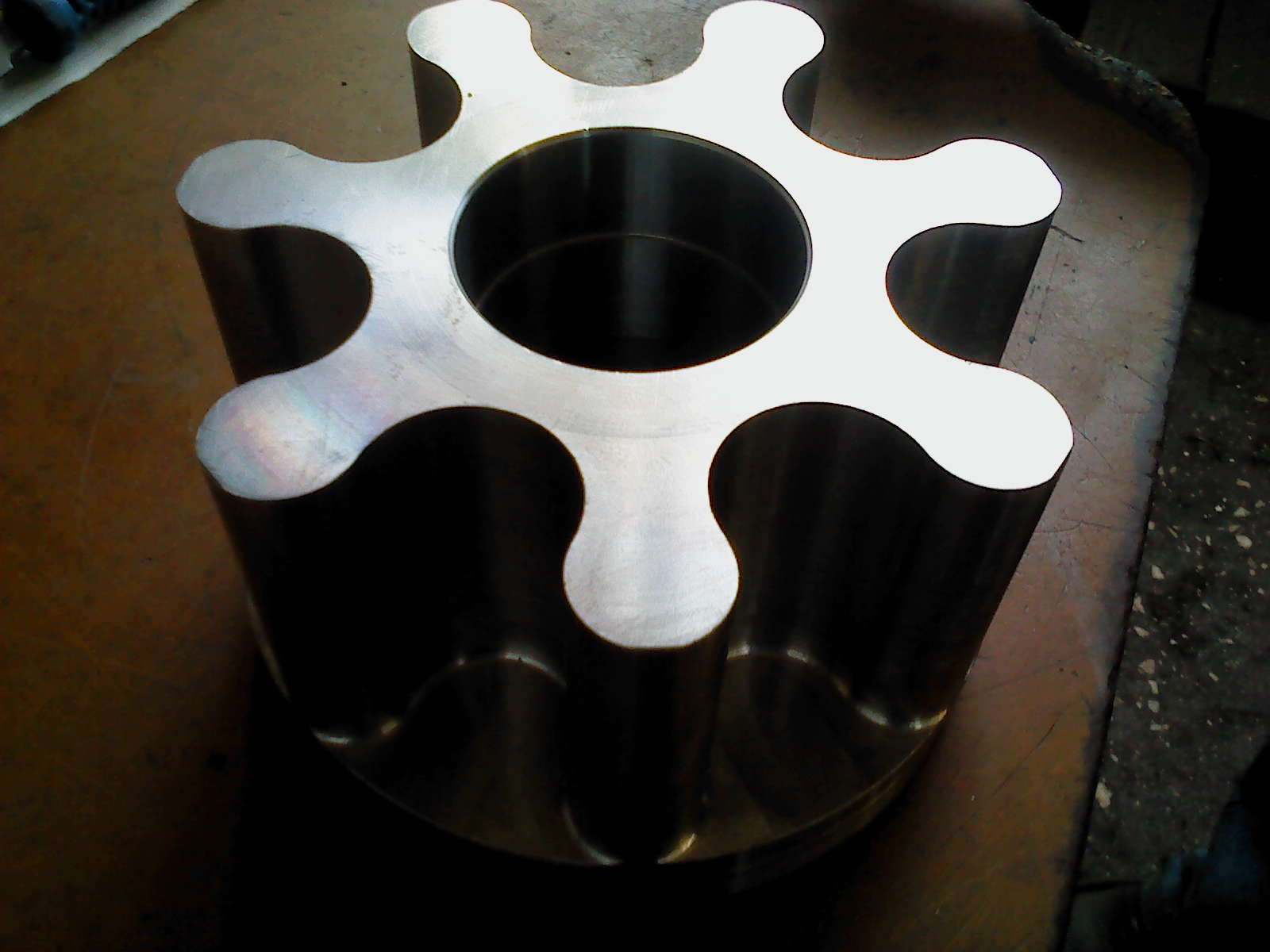
Rotors and lobe rotors
Profiled rotors with bores and keyways, finish-machined to drawing.
-
Star wheels and profiled plates
Star wheels, star flanges and profiled plates milled on CNC machining centres.
-
Rings and flanges
Large rings, slotted rings and flanges with bolt circles, turned and face-ground.
-
Drums and hollow cylinders
Heavy drums and cylinders bored on horizontal boring machines.
-
Housings and pump bodies
Gearbox housings and pump bodies machined complete (faces, bores, drilling, threading) on a horizontal machining centre.
-
Dies and tooling parts
Press-forming dies, extrusion-press parts and multi-part dies, with nitriding where required.
-
Propeller and ship-machinery parts
Propeller blade flanges, hubs and other propulsion parts machined on boring mills.
-
Welded and machined parts
Fabricated parts welded in our welding and joining department and then machined.
-
Maximum workpiece size
Milling workpiece envelope up to 3.5 × 7 × 5 m.
-
CNC machine park
Two 4-axis CNC machining centres, a 3-axis CNC vertical mill and a horizontal machining centre with 60 tools.
Special components made to your drawing
Not every machine part is a gear or a shaft. Pumps need rotors and bodies, presses need dies and liners, ships need propeller hubs and flanges, process plants need drums, star wheels and rings. TSIRIKOS manufactures these special components to the customer’s drawing and specification. We have no catalogue: the drawing, the material and the tolerances come from you, and we turn them into a finished, inspected part.
The advantage of a shop that also makes shafts and pinion shafts and gears is that the processes a demanding part needs — turning, boring, milling, heat treatment, grinding, welding — are available in one place, and the sequence is planned as a whole.
Typical components
Rotors, star wheels and profiled plates
Lobe rotors, star wheels and profiled plates are milled on CNC machining centres and finished on bores and faces. The profile is taken from the drawing or a DXF file.
Rings, flanges and drums
Large rings and flanges are turned on heavy facing lathes and, where flatness matters, face-ground. Drums and hollow cylinders are bored on horizontal boring machines.
Housings and pump bodies
Gearbox housings and pump bodies are machined complete — faces, bearing bores, drilling and threading — so that bore alignment does not depend on several set-ups on different machines.
Dies and tooling parts
Press-forming dies, extrusion-press parts and multi-part dies are machined and, where wear resistance is needed, nitrided in our heat-treatment department.
Propeller and ship-machinery parts
Propeller blade flanges, hubs and other propulsion and steering parts are machined on horizontal boring mills.
Materials
Components can be made from low-, medium- and high-carbon steels and alloy steels, stainless steels, nickel alloys, aluminium, copper, brass and PTFE. Special-composition steels are selected for the application and the loads on the part. If the grade on an older drawing is no longer available, an equivalent grade can be agreed with you before the material is ordered.
From drawing to finished part
- Drawing review. We check tolerances, datums, material, heat treatment and finish, and ask questions before quoting — see manufacturing from drawings.
- Machining on conventional and CNC equipment — see precision CNC machining.
- Heat treatment where specified: quenching and tempering, nitriding, carburizing or induction hardening.
- Grinding of functional surfaces after heat treatment.
- Inspection of dimensions, hardness and roughness; inspection documents to EN 10204 on request.
What helps us quote quickly
These are general good practices for a manufacturing drawing:
- Tolerances where they matter. Tight tolerances on every dimension increase cost without adding function. Mark the critical fits and datums clearly.
- Complete specification. Material grade, heat treatment and hardness, surface finish and any coating belong on the drawing.
- 2D plus 3D. A STEP model helps with complex shapes, but the 2D drawing defines tolerances and finishes.
- Quantity and repeat. Tell us whether the part is a one-off or a recurring need; it changes the best way to make it.
Send your drawings
Send the drawing, the 3D model if you have one, the material and the quantity through the request a quote page. If you only have a worn part, our reverse engineering process starts from the sample.
Materials
-
Carbon and alloy steels
Low-, medium- and high-carbon steels and alloy steels, including special-composition steels imported to suit the application.
-
Stainless steels
For corrosive environments, water, chemical and food-contact applications.
-
Nickel alloys
For high-temperature or highly corrosive service.
-
Aluminium
For light components and housings.
-
Copper and brass
For conductive, sliding and corrosion-resistant parts.
-
PTFE (Teflon)
For sliding, sealing and insulating parts.
If your drawing names a material that is hard to source, an equivalent grade can be agreed with you before ordering.
Manufacturing approach
-
Drawing review
Tolerances, datums, material, heat treatment and finish are checked; open points are clarified before the quotation.
-
Material selection and sourcing
Raw material chosen per drawing or agreed equivalent.
-
Turning, boring and milling
Conventional and CNC turning, horizontal boring, CNC and conventional milling.
-
Heat treatment
Hardening, quenching and tempering, nitriding or carburizing in our own department.
-
Grinding
Cylindrical, internal and surface grinding of functional surfaces.
-
Inspection
Dimensional, hardness and roughness checks before dispatch.
Quality considerations
-
Dimensional inspection
Measurement of critical dimensions with calibrated instruments.
-
Surface roughness
Roughness of machined and ground surfaces measured with a calibrated digital roughness tester.
-
Hardness and crack examination
Hardness test after heat treatment and surface examination for micro-cracks.
-
Inspection documents
Learn more : Inspection documentsInspection documents to EN 10204 on request; type 3.2 requires an independent or customer inspector.
-
Confidential drawings
Customer drawings and manufacturing information are handled confidentially.
Representative images
-
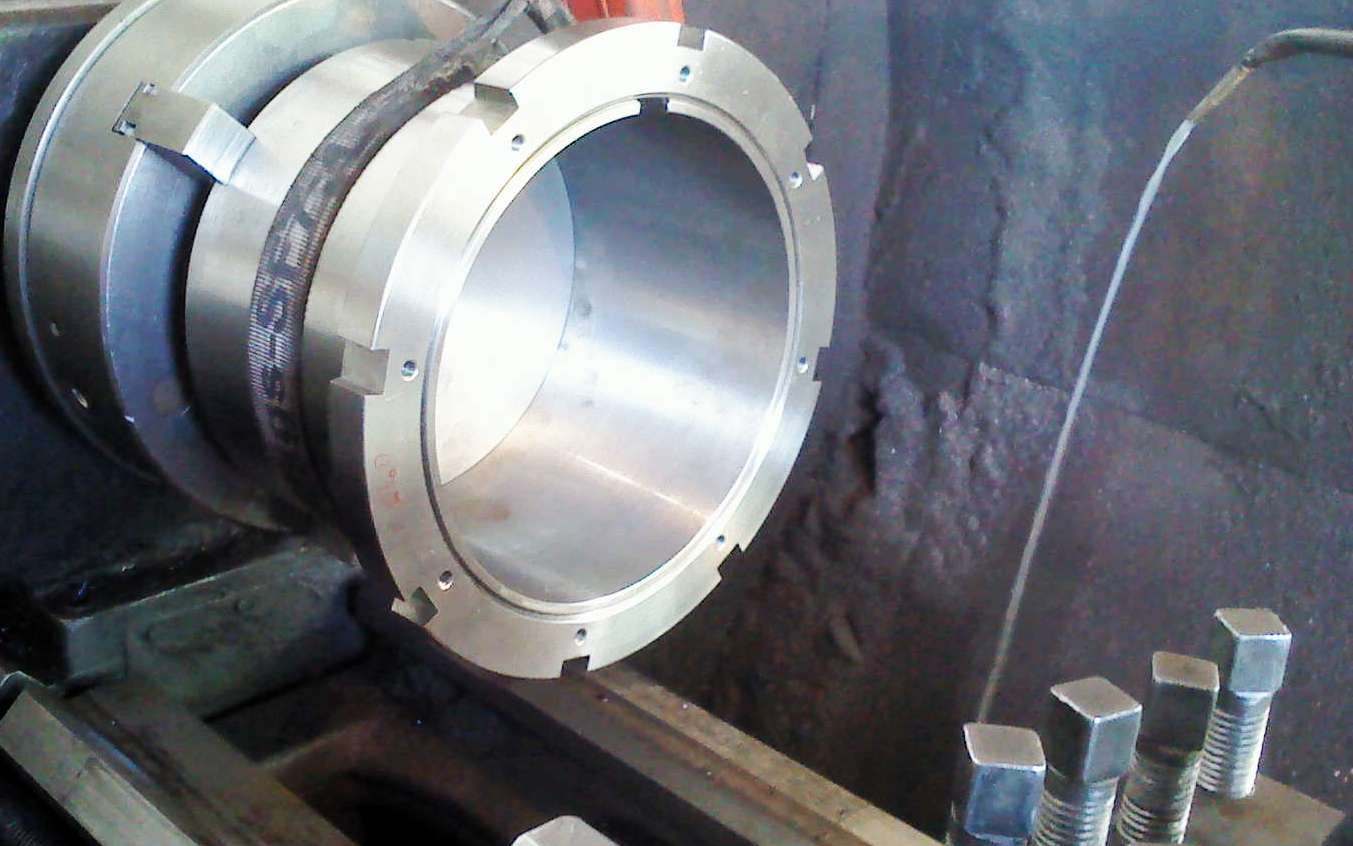
Large slotted steel ring finish-turned on a lathe -
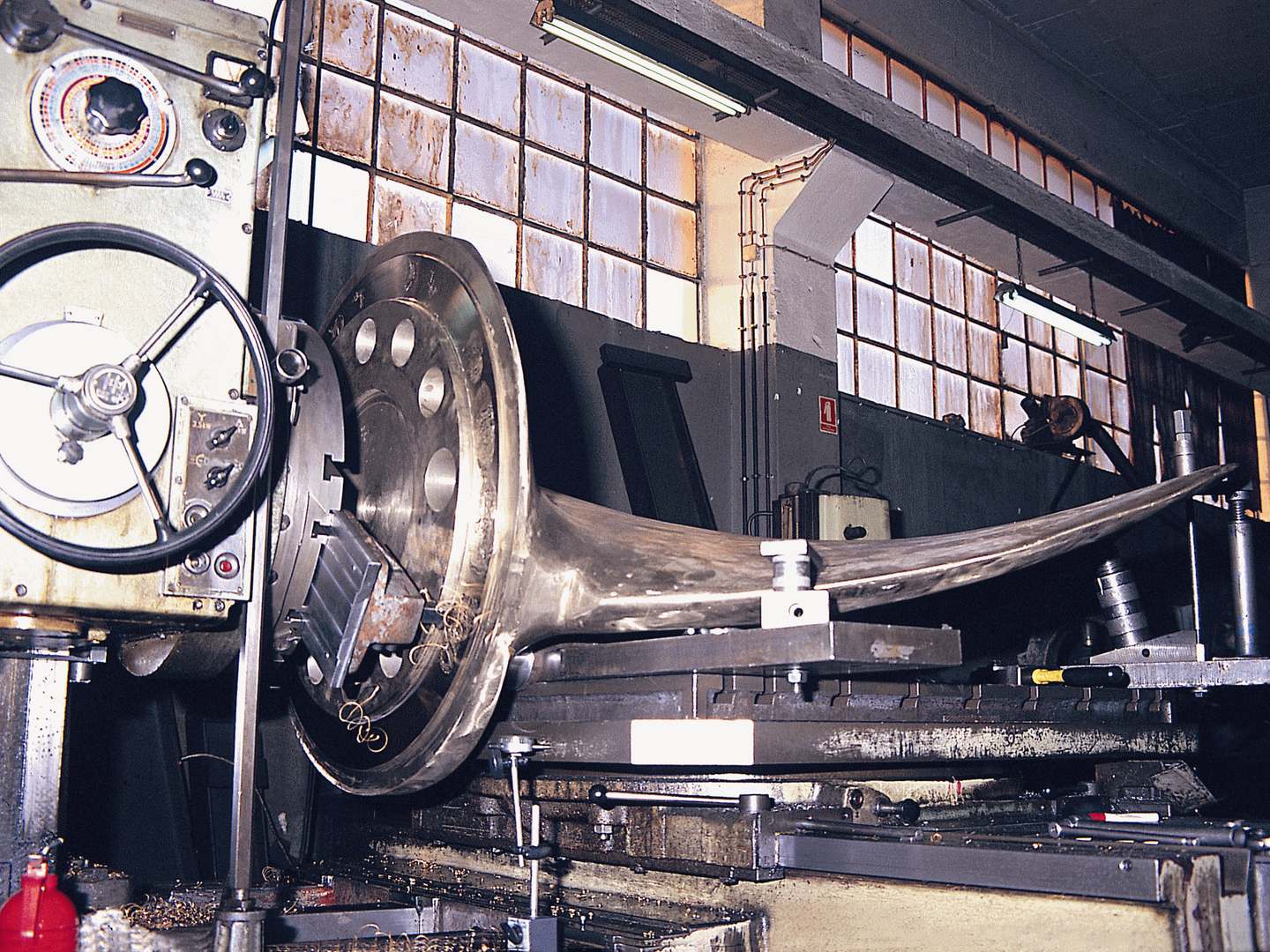
Marine propeller blade flange machined on a horizontal boring mill -
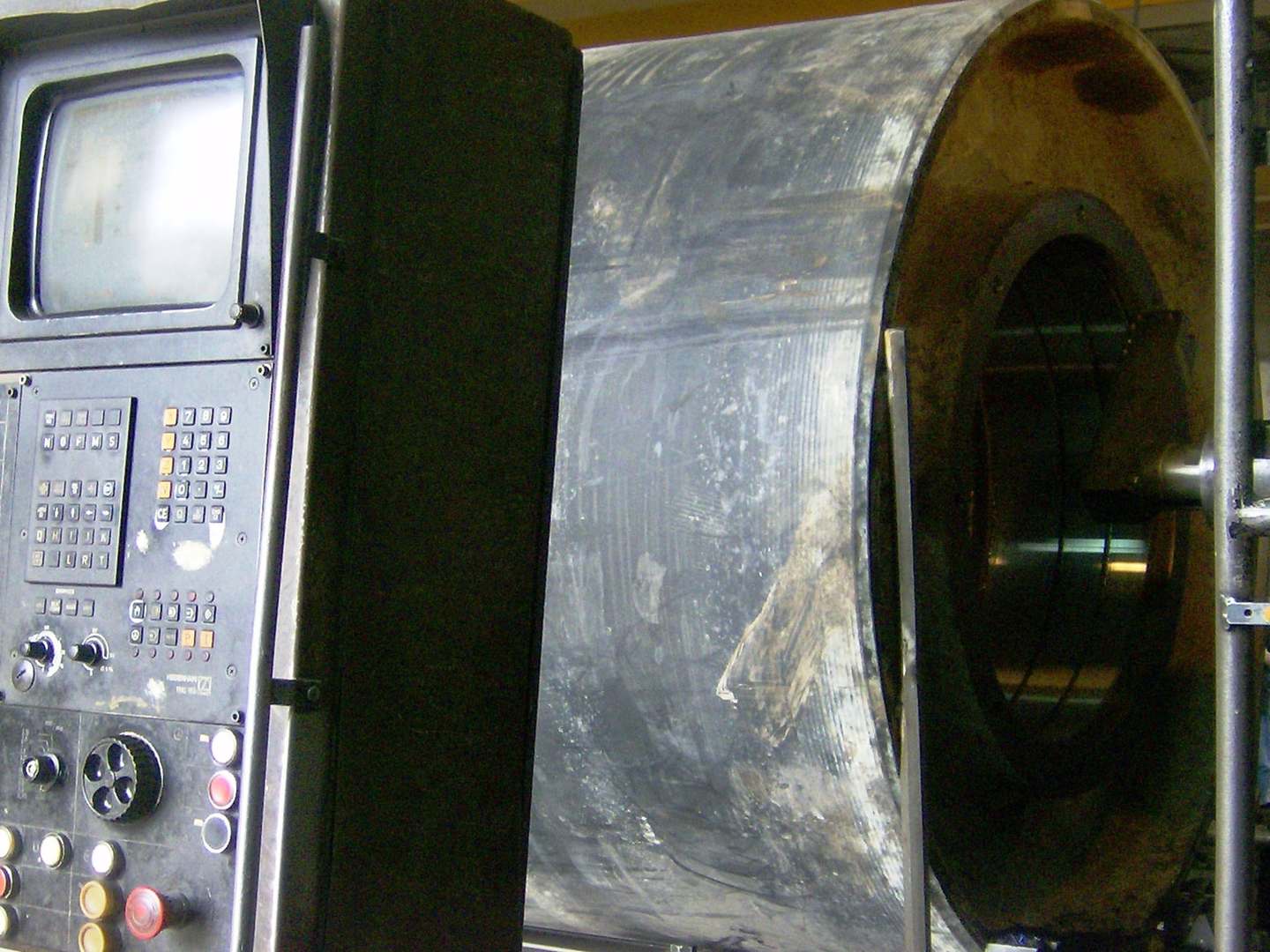
Large drum on a horizontal boring machine with Heidenhain CNC control -
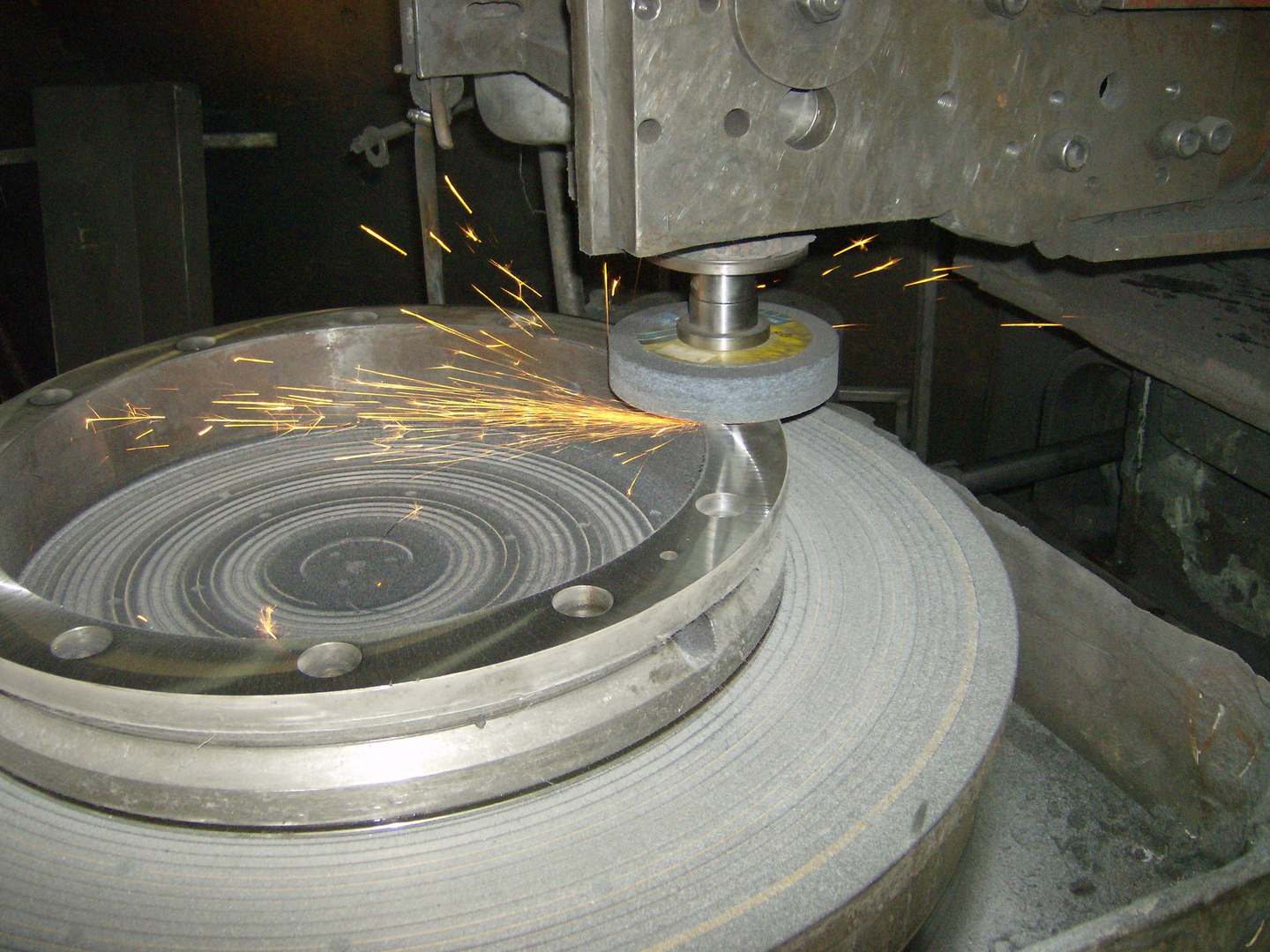
Grinding the face of a large flange ring, with sparks flying
Technical FAQ
Which drawing formats do you accept?
PDF drawings are enough to quote. DWG or DXF files and STEP models are useful for profiles and complex geometry. Please always include a 2D drawing with tolerances, surface finish and material.
Do you machine non-ferrous metals and plastics?
Yes. Besides carbon, alloy and stainless steels, components can be made from nickel alloys, aluminium, copper, brass and PTFE.
Can you deliver the part heat treated and ground?
Yes. Heat treatment is carried out in our own department, and functional surfaces can be ground afterwards, so the part leaves the workshop finished.
Are our drawings kept confidential?
Yes. Customer drawings and manufacturing information are handled confidentially and used only for your enquiry and order.
How large can a component be?
We do not publish maximum dimensions on this page. Send the drawing with the overall dimensions and weight and we confirm feasibility for the specific part.
Related pages
Request for quotation — Custom Machined Components to Drawing
Special components machined to drawing — rotors, rings, flanges, drums, housings, dies, propeller parts — with in-house heat treatment and grinding.
Please attach your technical drawings and specifications to your email.