
Products
Extruder Screws and Barrels
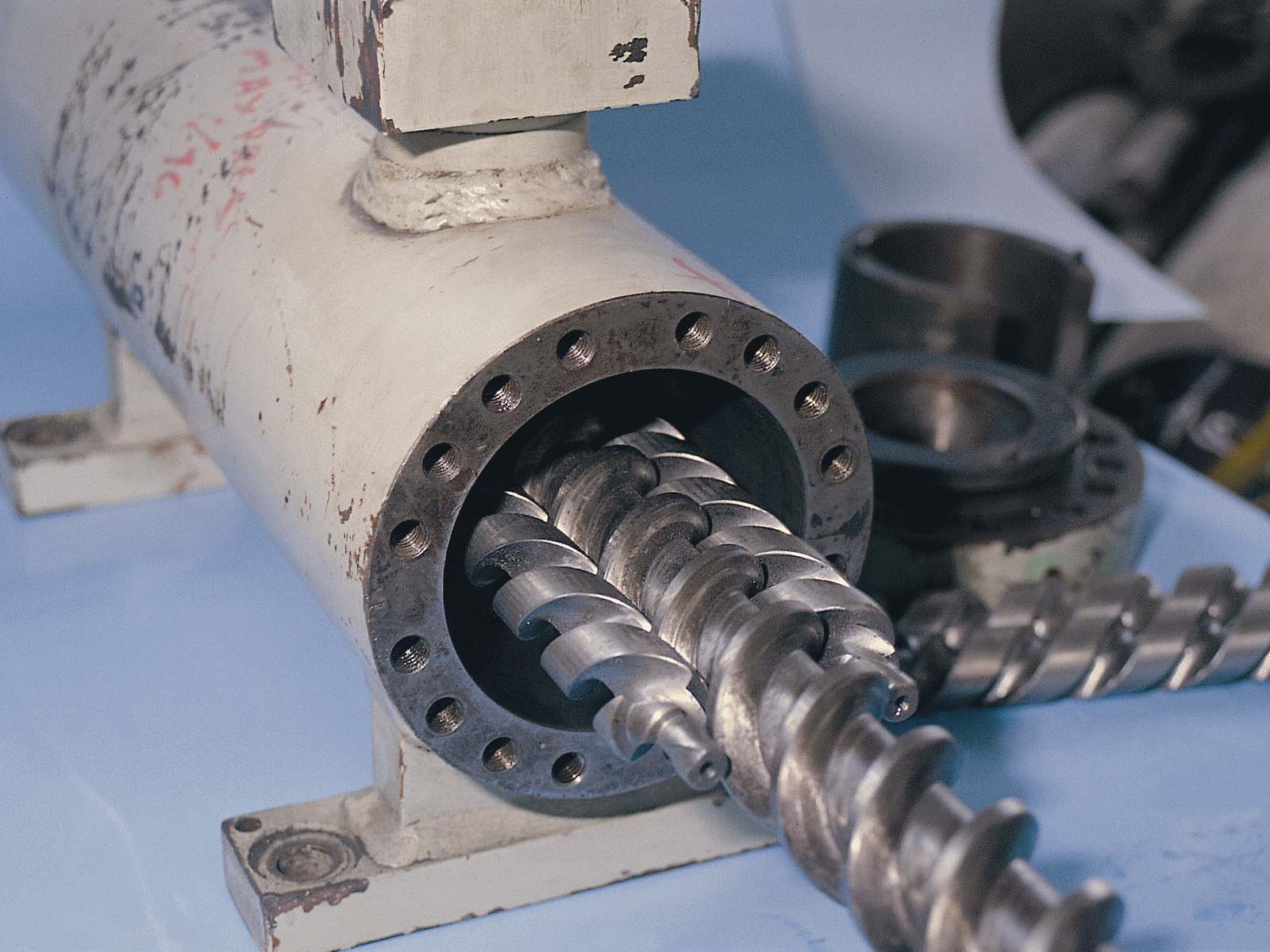
Since 1985 TSIRIKOS has manufactured and reconditioned parts for plastics machinery: extruder screws, twin-screw sets, injection screws, barrels for single- and twin-screw extruders, valve heads and dies, nitrided or nitrocarburized in our own heat-treatment department in Piraeus, Greece.
Main applications
-
Extrusion lines
Learn more : Extrusion linesScrews and barrels for single-screw extruders used for blown film and other extruded products.
-
Twin-screw extruders
Twin-screw sets and twin barrels for twin-screw extrusion.
-
Injection moulding machines
Injection screws, barrels and valve heads for injection units.
-
Polymer recycling
Learn more : Polymer recyclingScrews, barrels and dies for polymer regeneration lines.
What we manufacture
-
Single extruder screws
Plasticating screws with feed, compression and metering zones, mixing sections and keyed or splined drive shanks.
-
Twin-screw sets
Pairs of intermeshing screws made to drawing or sample.
-
Injection screws
Screws for injection moulding machines, with their valve heads.
-
Barrels (cylinders)
Barrels for single- and twin-screw machines, with flanges and feed ports as drawn.
-
Valve heads and dies
Valve heads for injection screws and dies for extrusion and polymer regeneration.
-
Segmented and conical twin-screw elements
Segmented screw elements on splined shafts and conical twin screws.
-
Bimetallic barrels and hardfaced flights
Barrels with wear-resistant liners and screws with hardfacing alloys on the flights.
-
Hard chrome plating
Hard chrome plating of screws or barrels (in-house or subcontracted).
-
Maximum screw length and diameter
Screws and barrels made to the length and diameter required by the extruder; send the main dimensions with your enquiry.
Screws and barrels for plastics processing since 1985
Alongside gears and gearboxes, TSIRIKOS has manufactured and repaired parts for plastics machinery since 1985: extruder screws, twin-screw sets, injection screws, barrels for single- and twin-screw machines, valve heads and dies. The parts are made to the customer’s drawing or measured from the worn original, nitrided or nitrocarburized in our own heat-treatment department and finished by grinding.
What the screw and barrel have to do
The screw conveys the polymer along the barrel, compresses it and removes trapped air and volatiles, melts it by shear and external heating, mixes it into a homogeneous melt and delivers it to the die at a steady pressure. These functions are spread along the screw:
- the feed zone, with deep flights, takes in the granules or powder;
- the compression (transition) zone, where the flight depth decreases, compacts and melts the material;
- the metering zone, with shallow flights, delivers a uniform melt; mixing sections may be added near the tip.
Two figures describe a screw at first glance: the L/D ratio (effective length divided by diameter) and the compression ratio (feed flight depth relative to metering flight depth, or the corresponding volume ratio). The clearance between the flight tips and the barrel bore is small, and it is what wear destroys first.
What we manufacture
- Single extruder screws with mixing sections and keyed or splined drive shanks.
- Twin-screw sets made to drawing or sample.
- Injection screws and their valve heads.
- Barrels for single- and twin-screw machines, with flanges and feed ports as drawn.
- Dies for extrusion and polymer regeneration.
Long screws are turned between centres with steady rests and their flights machined on a long-bed lathe. The flight outside diameter is then ground, and barrels are ground as well.
Surface protection
Nitriding and nitrocarburizing are carried out in our own heat-treatment department. Both processes produce a hard, wear-resistant surface at a relatively low temperature, so distortion of long, slender screws stays small. Nitriding steels such as 31CrMoV9 or 34CrAlNi7 are typical choices.
Other protections are common in the industry for highly filled or corrosive compounds: hard chrome plating, hardfacing alloys on the flight lands, and bimetallic barrels with a wear-resistant liner. If your application needs one of these, mention it in your request so we can discuss the options.
Reconditioning worn screws and barrels
A screw does not always need to be replaced. Where the body is sound, it can be reconditioned:
- damaged material is removed from the worn flights;
- new material is joined to the flights;
- the screw is machined back to its nominal dimensions and roughness;
- it is nitrided or nitrocarburized.
Reconditioning is described in more detail under industrial mechanical repair. Whether to recondition or replace depends on the wear of both screw and barrel: measuring the flight diameter and the barrel bore at several points is the first step.
Related equipment
Extruders are also driven by gearboxes with heavily loaded thrust bearings. For the drive side, see our gearboxes and speed reducers and the plastics and extrusion industry page.
What to send
Send the drawing or the worn screw and barrel data — diameter, L/D, single or twin screw, flight geometry, drive end, material and surface treatment, the polymer you process, quantity and delivery location — through the request a quote page.
Materials
-
Nitriding steels
For example 31CrMoV9 (1.8519), 34CrAlNi7 (1.8550) and 41CrAlMo7 (1.8509), giving a hard nitrided surface.
-
Alloy and tool steels
For example 42CrMo4 (1.7225) or 40CrMnNiMo8-6-4 (1.2738), selected for the polymer and the loads.
-
High-strength barrel steels
Barrels in high-strength steels protected against wear and corrosion by surface treatment.
Tell us which polymer and fillers you process: glass fibre, mineral fillers or corrosive additives change the choice of steel and surface treatment.
Manufacturing approach
-
Drawing or sample review
Screw geometry, barrel bore, drive end and material are checked; a worn screw is measured if no drawing exists.
-
Turning and flight machining
Long screws are turned between centres with steady rests and the flights are machined on a long-bed lathe.
-
Nitriding or nitrocarburizing
Gas nitriding or nitrocarburizing in our own heat-treatment department for a hard, wear-resistant surface with low distortion.
-
Grinding
Grinding of the flight outside diameter and the shank of screws; grinding of barrels.
-
Inspection
Flight diameter, runout, hardness and roughness checked before dispatch.
Quality considerations
-
Flight diameter and runout
Outside diameter of the flights and concentricity checked with calibrated instruments.
-
Surface hardness
Hardness measured after nitriding or nitrocarburizing.
-
Surface roughness
Roughness of flights and root measured with a calibrated digital roughness tester.
-
Crack examination
Learn more : Crack examinationSurface examination for micro-cracks after grinding and heat treatment.
Representative images
-
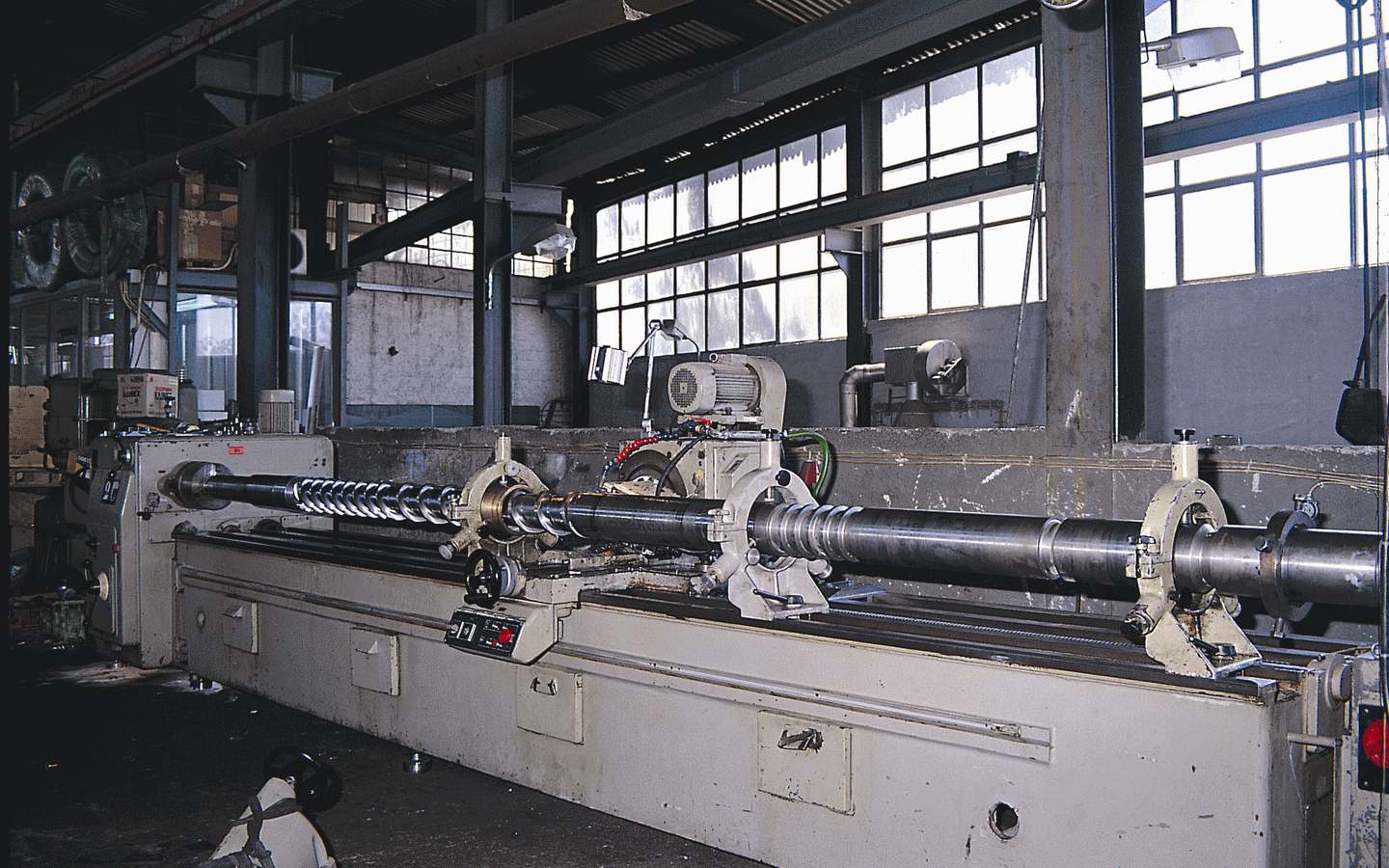
Long extruder screw machined on a long-bed lathe with steady rests -
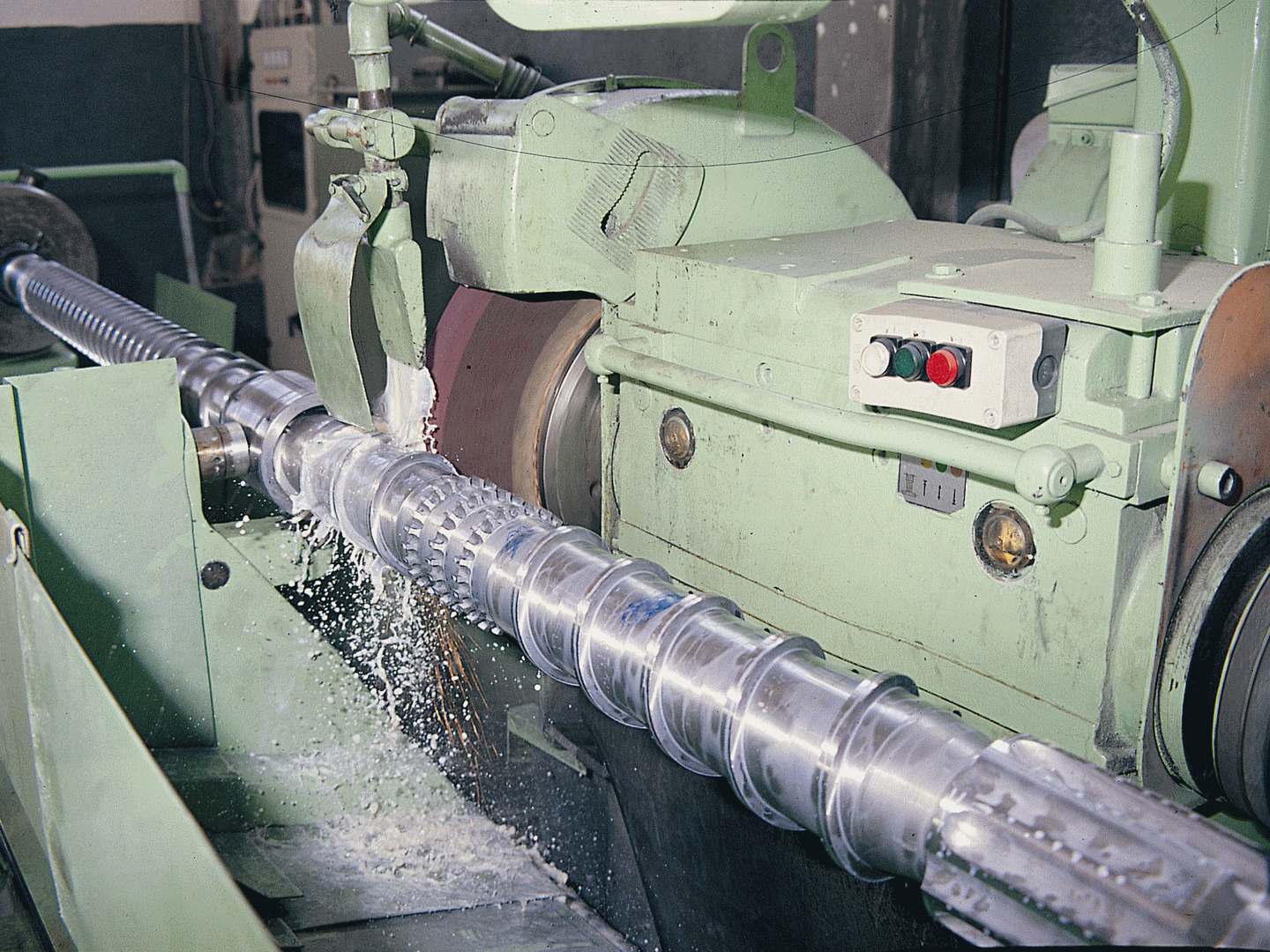
Extruder screw being ground on a cylindrical grinding machine with coolant spray -
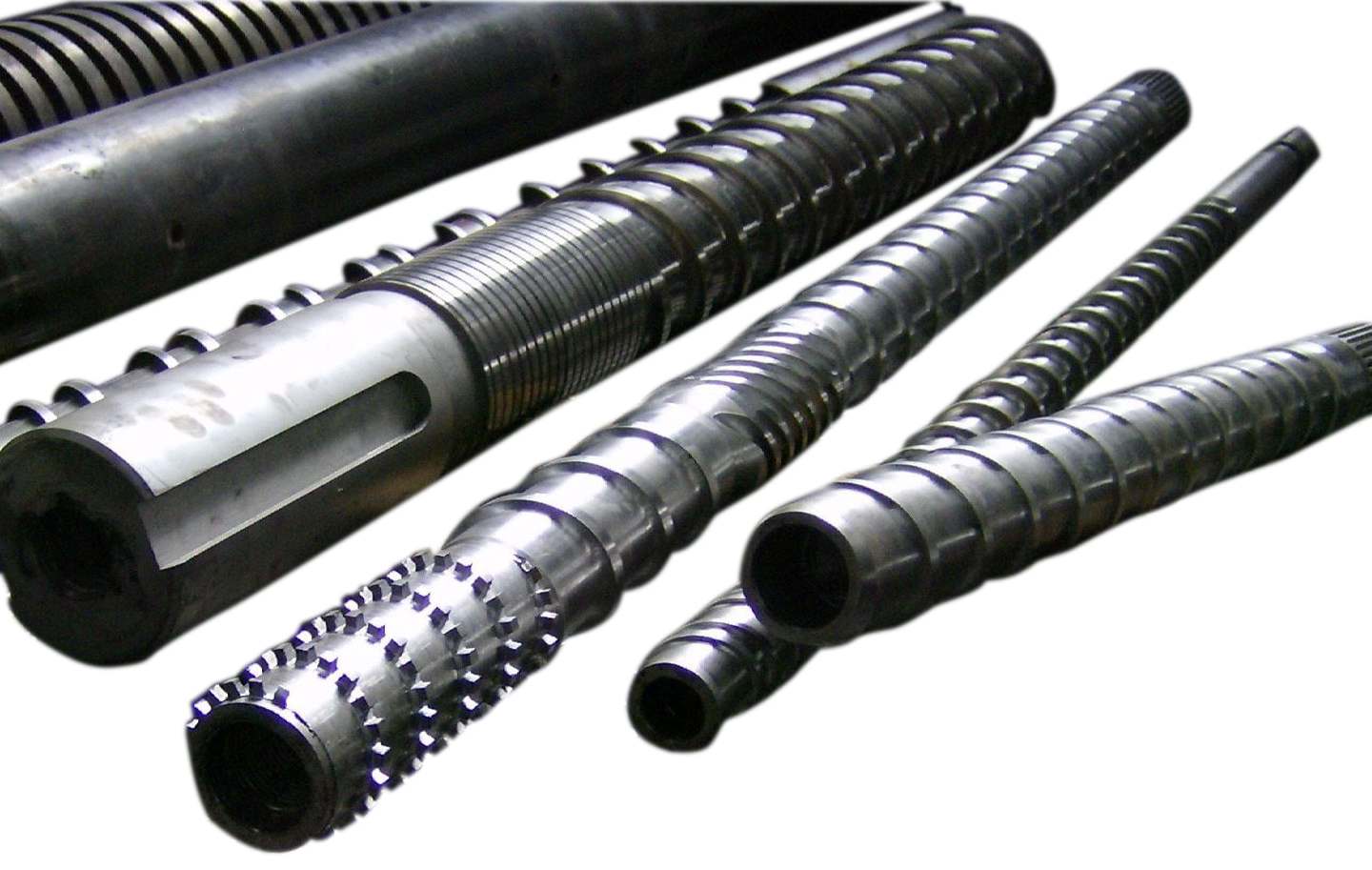
Extruder screws with mixing section, keyed drive shank and cored screw ends -
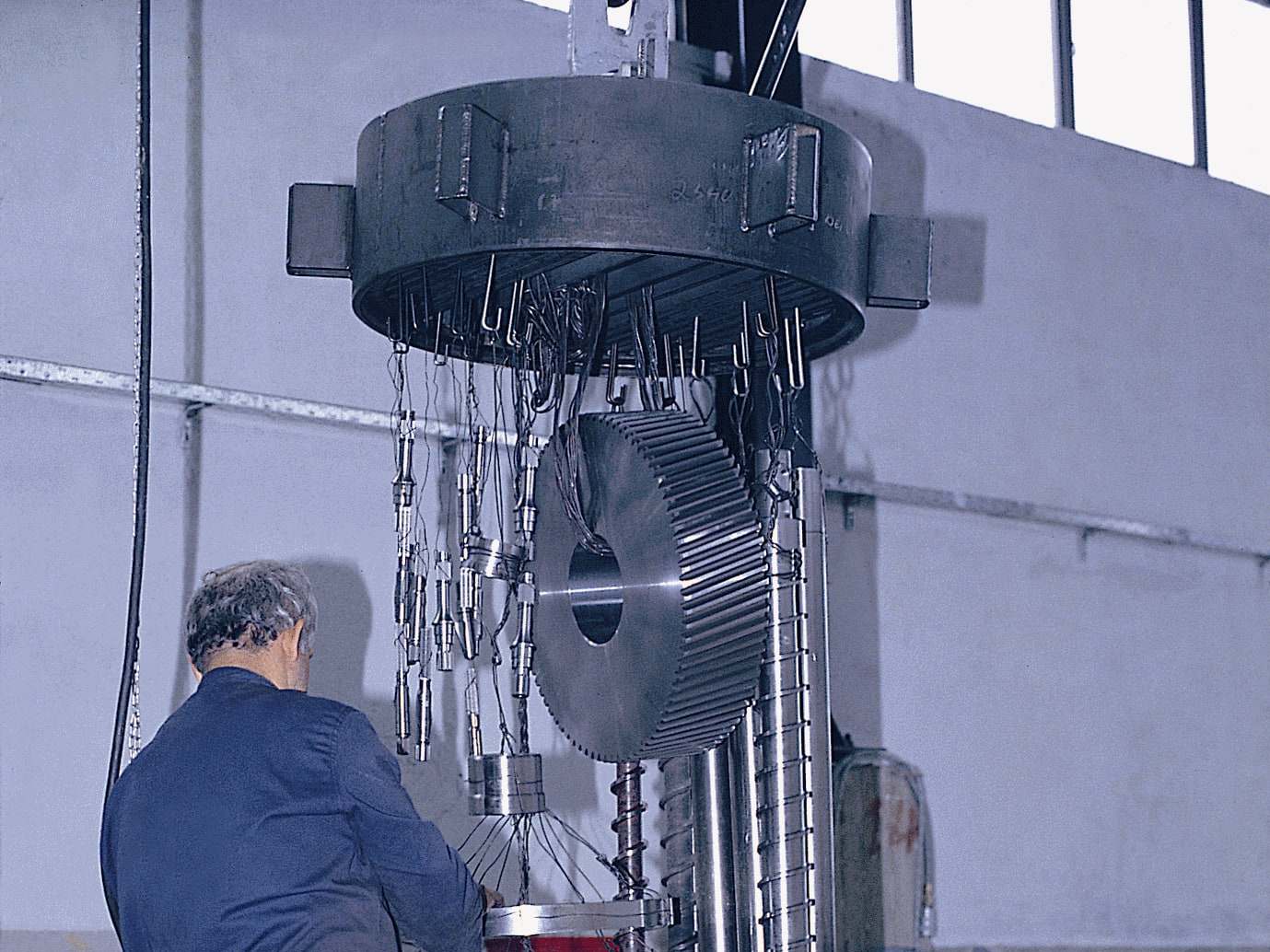
Extruder screws, helical gear and shafts suspended on a fixture above a pit furnace
Technical FAQ
Can you recondition a worn extruder screw?
Where the screw body is sound, yes. Damaged material is removed, new material is added to the flights, the screw is machined back to its nominal dimensions and roughness, and it is nitrided or nitrocarburized.
How do I know whether the screw or the barrel is worn?
Measure the flight outside diameter along the screw and the barrel bore at several points. Wear increases the clearance between flight and barrel; beyond the machine maker’s limit, backflow rises, output drops and melt temperature becomes harder to control.
Is nitriding enough for glass-filled or abrasive polymers?
Nitriding gives a hard, wear-resistant surface that suits many polymers. For strongly abrasive or corrosive compounds, hardfaced flights or bimetallic barrels are commonly used. Tell us the polymer and fillers so the material and treatment can be chosen accordingly.
Can you make a screw without a drawing?
Yes. The old screw is measured — diameter, pitch, flight depths, zone lengths, mixing sections and drive end — and a drawing is prepared for your approval. Measurements of the barrel bore help us size the new screw.
Do you also work on twin-screw extruders?
Yes. Twin-screw sets and twin barrels are part of our work for plastics machinery. Send the drawing or the parts so we can confirm feasibility for your specific design.
Related pages
Request for quotation — Extruder Screws and Barrels
Extruder and injection screws, single and twin barrels, valve heads and dies, made to drawing or sample, nitrided in-house and reconditioned when worn.
Please attach your technical drawings and specifications to your email.