
Services · Heat treatment
Heat Treatment: Gas Carburizing, Nitriding and Induction Hardening
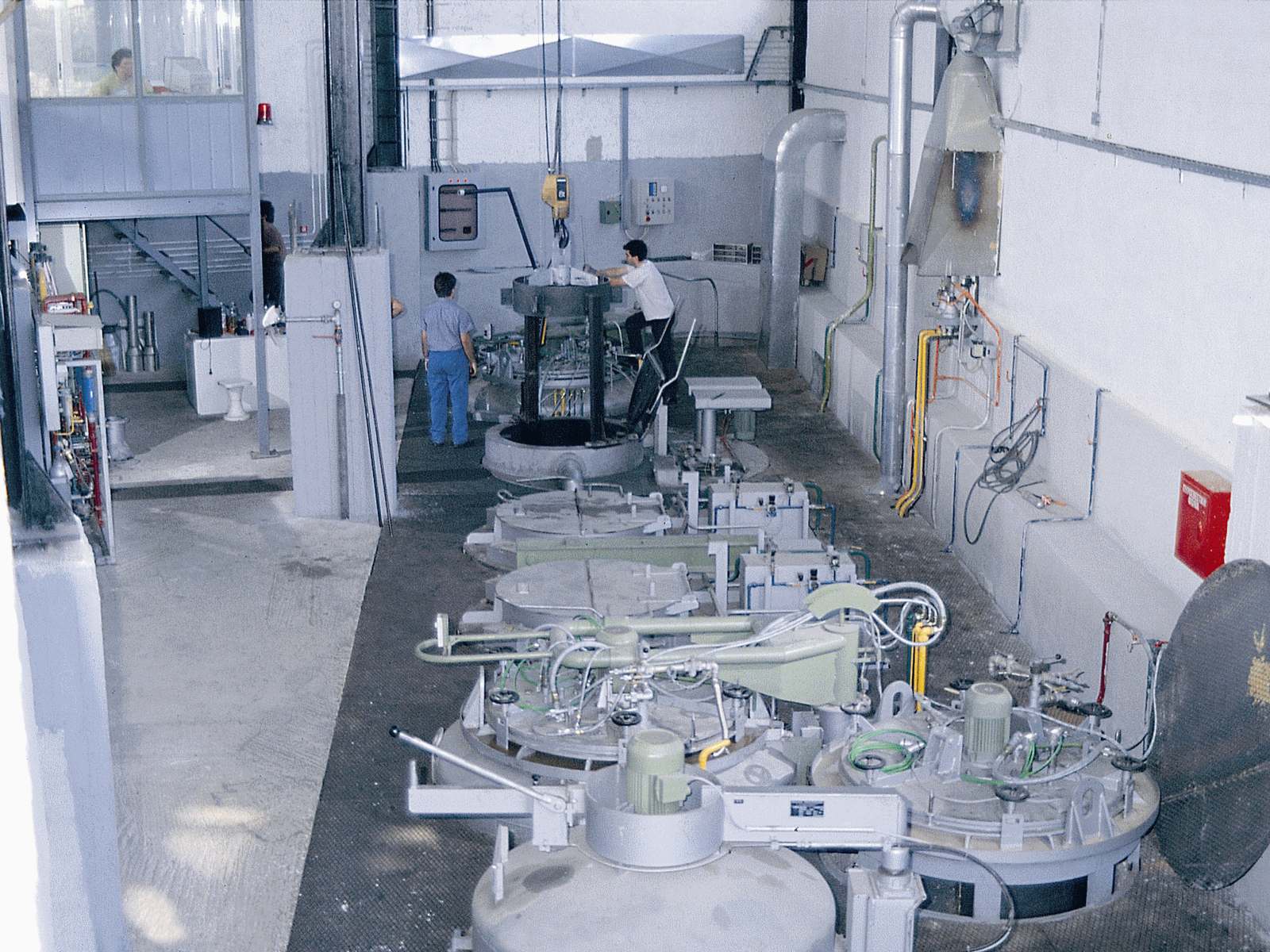
TSIRIKOS operates its own heat-treatment department in Piraeus, Greece, for its own gears and components and for parts supplied by customers: gas carburizing with oil quenching and tempering, carbonitriding, gas nitriding, gas nitrocarburizing, induction hardening, hardening and tempering, normalizing, annealing and ageing. Carburizing cycles are computer-controlled and the process conditions are recorded.
Main applications
-
Gears and pinion shafts
Learn more : Gears and pinion shaftsCase hardening of gears and pinion shafts by gas carburizing before tooth grinding.
-
Extruder screws and barrels
Learn more : Extruder screws and barrelsNitriding and nitrocarburizing for wear and corrosion resistance of screws and barrels.
-
Aluminium extrusion dies
Learn more : Aluminium extrusion diesHardening heat treatment of aluminium extrusion dies.
-
Shafts, spindles and wear parts
Machine spindles and shafts, timing gears, dies, valves, crankshafts, camshafts, sleeves and pump parts.
-
Large ring gears
Tooth-by-tooth induction hardening of large spur ring gears.
Processes
-
Gas carburizing, oil quench and tempering
Carbon diffused into the surface of case-hardening steels in a protective gas atmosphere, followed by oil quenching and tempering.
-
Carbonitriding
Carburizing with simultaneous nitrogen enrichment, followed by quenching.
-
Gas nitriding (short and long cycles)
Low-temperature nitriding without quenching, for hard, wear-resistant surfaces with minimal distortion.
-
Gas nitrocarburizing
Forms a compound (white) layer that increases wear, fatigue and corrosion resistance; the low process temperature limits distortion and cracking.
-
Induction hardening
Local surface hardening, including tooth-by-tooth hardening of large gears, in the induction heat-treatment department.
-
Hardening, tempering, normalizing, annealing, ageing
Through-hardening and tempering of alloy steels, normalizing, annealing and ageing treatments.
-
Heat treatment of customer parts
Heat treatment is offered as a service for parts machined by customers, not only for our own production.
-
Carburizing: case depth up to 2.5 mm
Case-hardening depth (CHD) after carburizing of up to 2.5 mm from the surface.
-
Carburizing: 55–65 HRC surface hardness
Surface hardness on case-hardening steels (e.g. 1.5919, 1.6587) of 55–65 HRC, depending on the carburizing programme.
-
Nitrocarburizing: 55–62 HRC surface hardness
Surface hardness of 55–62 HRC, depending on material and process parameters.
-
Furnace dimensions and maximum load
Each load is matched to the working dimensions and load capacity of our furnaces and induction equipment; send the part dimensions and weight with your request.
In-house heat treatment for gears and components
Heat treatment decides the load capacity and the wear life of a gear or shaft. Having it in-house means that machining allowances, the heat-treatment cycle and the finishing operations are planned together, and that hardened parts do not travel between subcontractors. Our heat-treatment department works for our own production and, as a service, for parts supplied by customers.
Processes
Gas carburizing, quenching and tempering
Gas carburizing diffuses carbon into the surface of a low-carbon case-hardening steel. After quenching in oil and tempering, the part has a hard, wear-resistant case and a tough core: the standard treatment for highly loaded gears and pinion shafts. Our carburizing atmosphere is nitrogen and methanol for protection against oxidation, with propane to adjust the carbon potential.
Cycles are designed with dedicated software: from the material data (alloy factor, core hardness), the software simulates the carbon profile versus depth using the laws of diffusion and defines temperature, carbon potential and time. The process is then run under electronic control, and the conditions are recorded continuously.
Carbonitriding
A variant of carburizing in which nitrogen is added to the atmosphere, followed by quenching. Not to be confused with nitrocarburizing.
Gas nitriding
Nitriding is carried out at low temperature without quenching, so distortion is small and parts can be nitrided close to final size. Short and long cycles are used depending on the required depth.
Gas nitrocarburizing
Nitrocarburizing forms a compound (white) layer that increases resistance to wear, fatigue and corrosion (except on stainless steels). The low process temperature limits distortion and the risk of cracking. Typical parts are spindles, timing gears, dies, extruder screws and barrels, valves and crankshafts.
Induction hardening
Induction hardening heats only the zone to be hardened, such as a journal, a cam or a tooth flank, and quenches it immediately. Large ring gears can be hardened tooth by tooth.
Hardening, tempering and other treatments
Quenching and tempering of alloy steels, normalizing, annealing and ageing complete the range.
How to specify heat treatment correctly
Most heat-treatment disputes start with an incomplete drawing. Please specify:
- the material grade;
- the process;
- surface hardness and, where relevant, core hardness;
- case depth with its criterion: for carburizing, the case-hardening depth (CHD) to a limit hardness of 550 HV according to ISO 18203; for nitriding, the nitriding hardness depth relative to the core hardness;
- areas to be protected, and the grinding allowance left on the part.
Our guide on gear materials and heat treatment explains these concepts.
Heat treatment within a complete manufacturing chain
Because precision machining, gear cutting and grinding are in the same plant, we can deliver a finished, hardened and ground part, for example industrial gears or nitrided extruder screws and barrels. For heat treatment only, send the drawing, material and requirements through the request for quotation page.
Materials
-
Case-hardening steels
For carburizing, e.g. 1.5919 (15CrNi6) and 1.6587 (18CrNiMo7-6).
-
Nitriding and nitrocarburizing steels
Indicative: 1.8521 15CrMoV5-9, 1.8515 31CrMo12, 1.8519 31CrMoV9, 1.8550 34CrAlNi7, 1.8509 41CrAlMo7, 1.8507 34CrAlMo5.
-
Quenched and tempered and tool steels
Indicative for nitrocarburizing: 1.6580 30CrNiMo8, 1.6582 34CrNiMo6, 1.7225 42CrMo4, 1.2738 40CrMnNiMo8-6-4.
Steels we treat regularly. Suitability of other grades is checked per request.
How we work
-
Cycle design
Temperature, carbon potential and time are defined with dedicated software that simulates the carbon profile versus depth from the material data.
-
Protective atmosphere
Nitrogen and methanol protect the parts against oxidation; propane adjusts the carbon potential.
-
Controlled process
The carburizing process is controlled by an electronic controller and PC software, keeping parameters within tolerance.
-
Continuous recording
Process conditions are recorded continuously, providing a record of each treatment.
-
Recording interval of 10 seconds
Carburizing conditions are recorded every 10 seconds.
-
Hardness check and documentation
Hardness is measured after treatment and a quality certificate is issued with the treated parts.
Quality considerations
-
Surface hardness testing
Surface hardness measured after heat treatment.
-
Crack examination
Surfaces examined for micro-cracks after hardening.
-
Heat-treatment certificate
A quality certificate is issued for treatments carried out in the protective-atmosphere centre.
Representative images
-
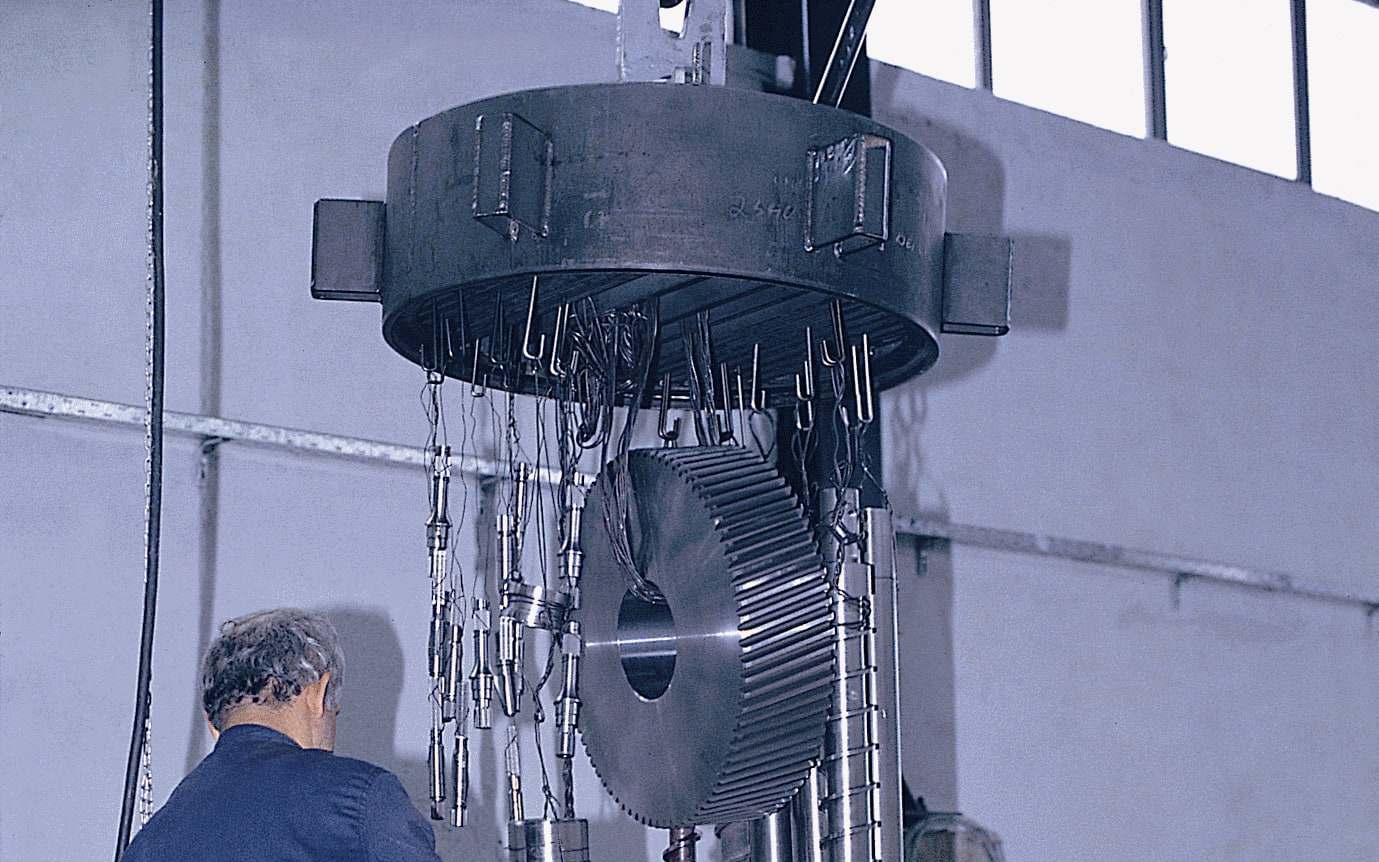
Extruder screws, helical gear and shafts suspended on a fixture above a pit furnace -
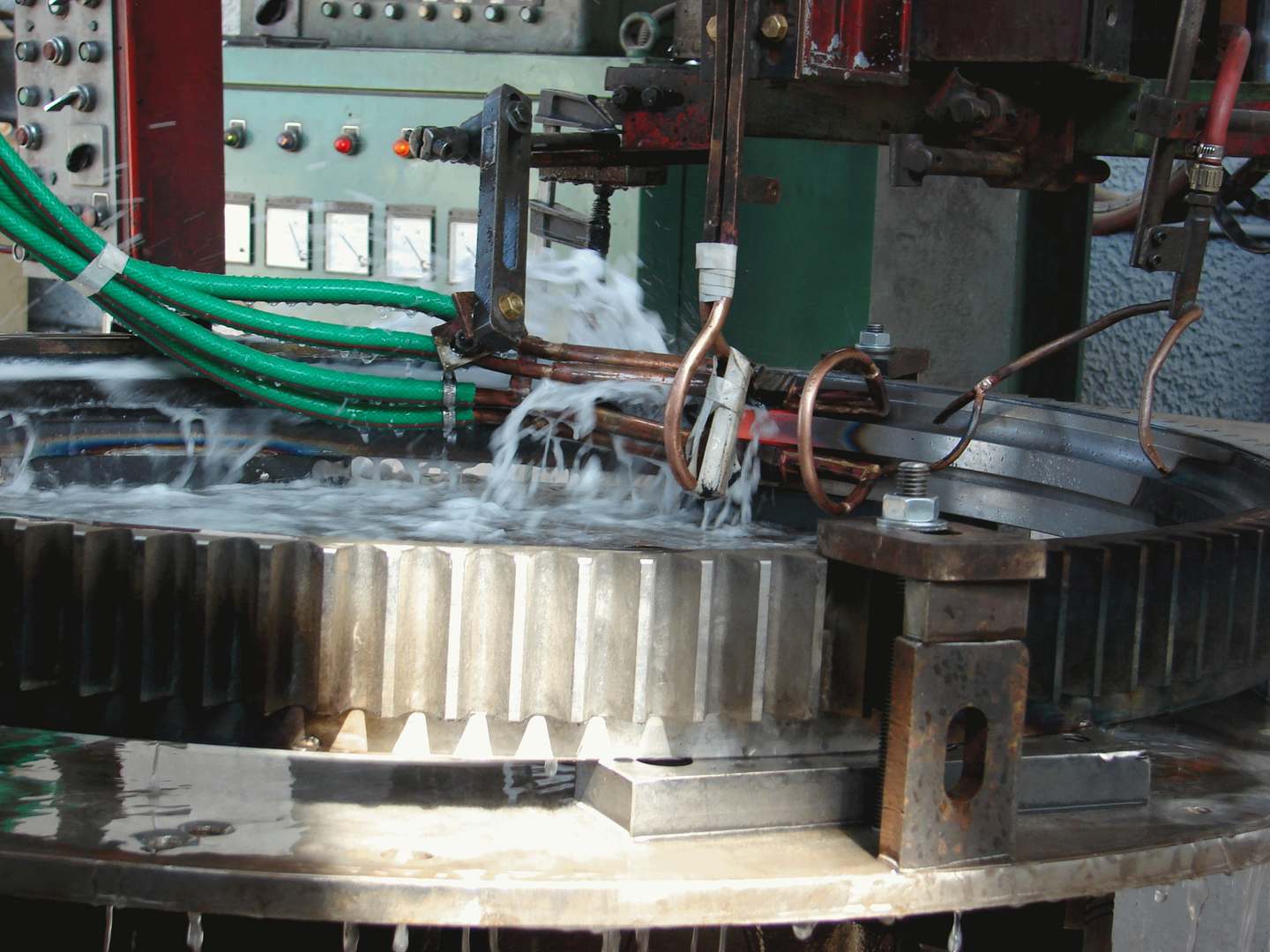
Large spur ring gear being induction hardened tooth by tooth with quench spray -
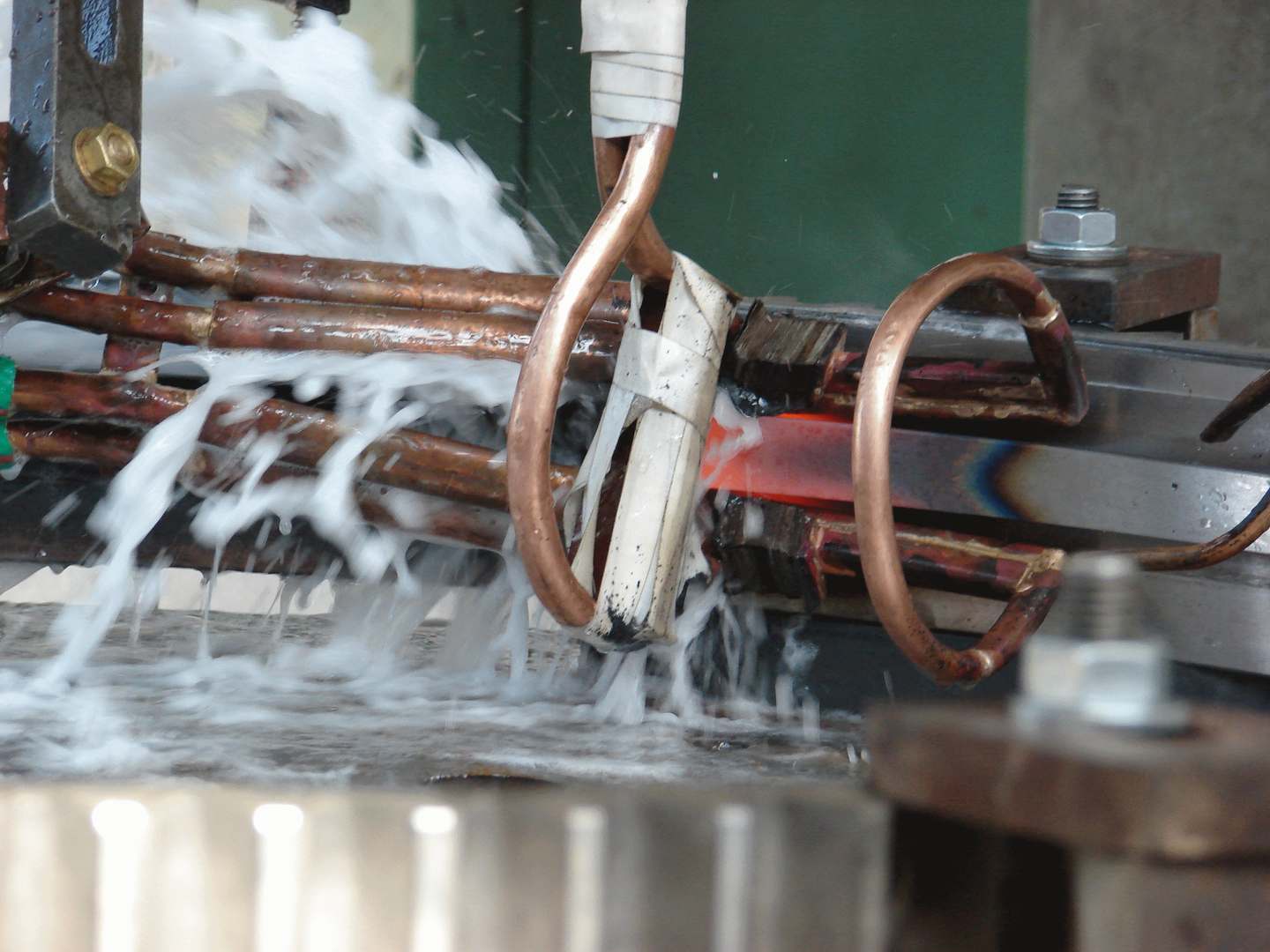
Copper induction coil heating a gear tooth red-hot while quenchant sprays around it -
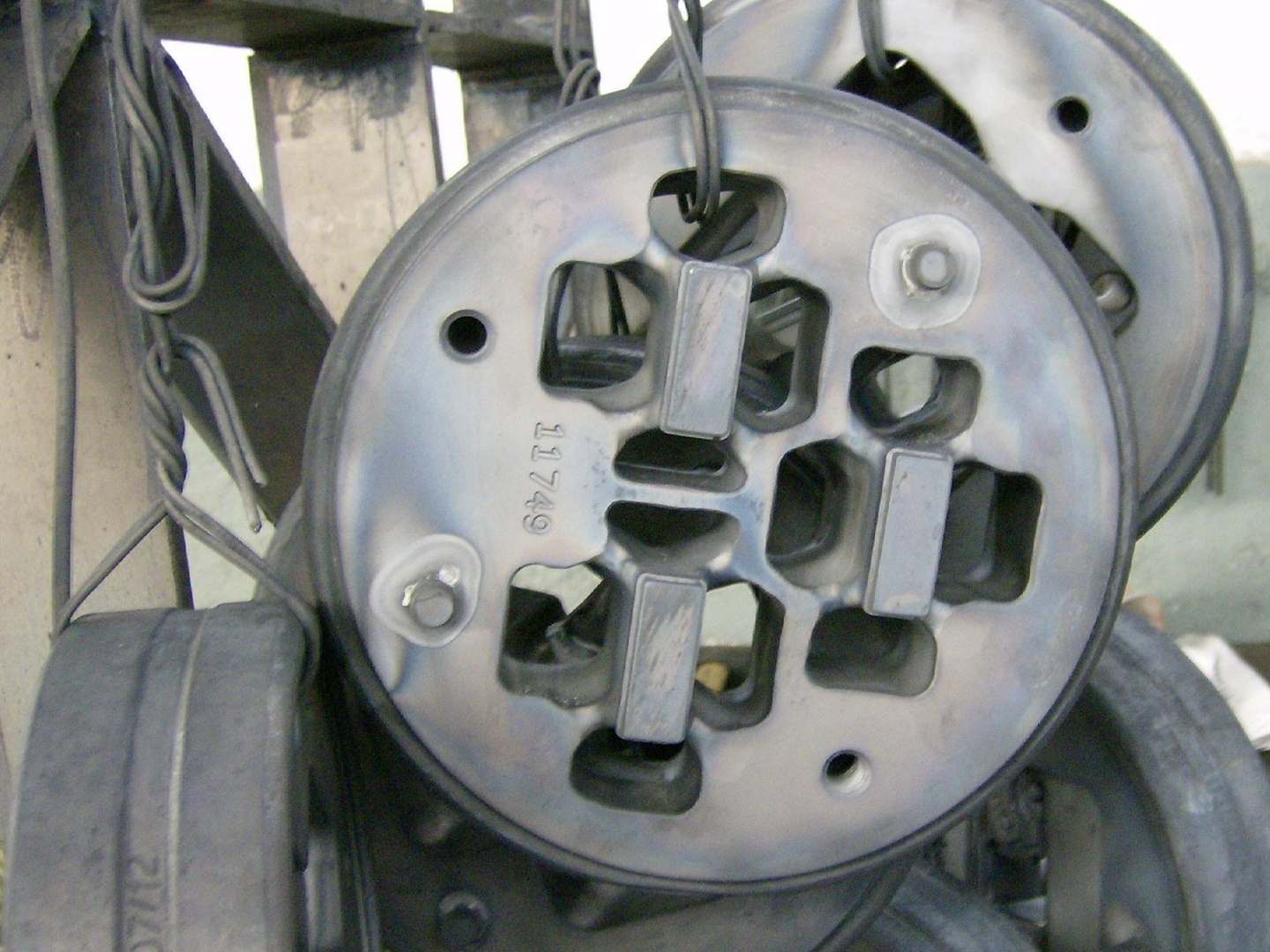
Aluminium extrusion dies hung on wire in the workshop
Technical FAQ
Do you heat-treat parts that you did not machine?
Yes. Heat treatment is offered as a service for customer parts, including aluminium extrusion dies. Send the material, the drawing and the required hardness and case depth.
What is the difference between nitriding and nitrocarburizing?
Both are low-temperature thermochemical treatments without quenching. Nitriding diffuses nitrogen and produces a hard diffusion layer; nitrocarburizing adds carbon and nitrogen and forms a thin compound (white) layer with good wear and corrosion resistance. Carbonitriding is a different process: a high-temperature variant of carburizing followed by quenching.
Why are carburized gears ground after heat treatment?
Quenching after carburizing causes distortion. Grinding the tooth flanks and bearing seats after hardening restores the accuracy of profile, helix and fits. We carburize and grind spur and helical gears in-house.
What case depth should I specify?
It depends on module, load and grinding allowance. Specify the case-hardening depth (CHD) with its limit hardness, conventionally 550 HV according to ISO 18203, and the surface hardness. Our guide on gear materials and heat treatment explains the concepts.
Do you supply heat-treatment records?
Yes. Carburizing conditions are recorded continuously and a quality certificate is issued for each treatment. Specify the records you need in your request.
Related pages
Request for quotation — Heat Treatment: Gas Carburizing, Nitriding and Induction Hardening
Gas carburizing, carbonitriding, nitriding, nitrocarburizing, induction hardening and quenching and tempering, for our own parts and for parts supplied by customers.
Please attach your technical drawings and specifications to your email.